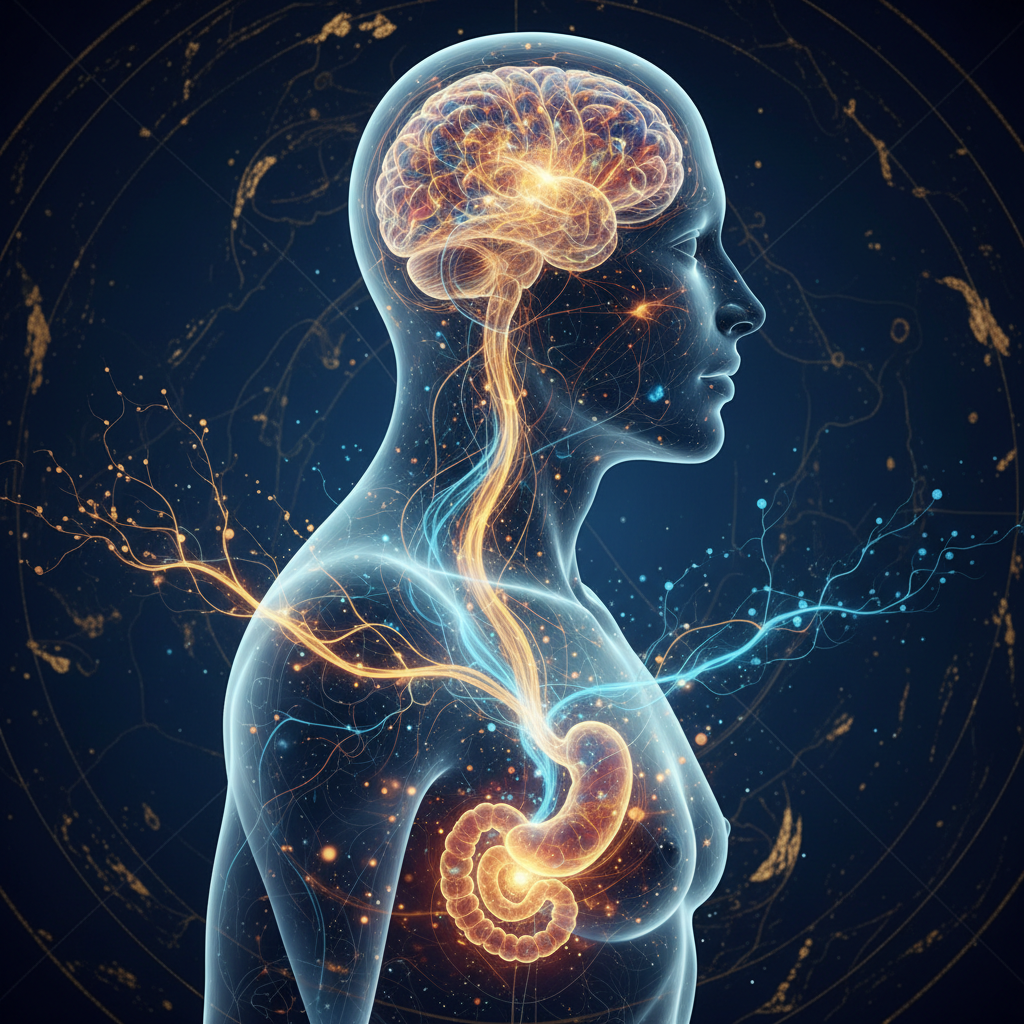
The gut-brain connection – how your gut shapes your mood
How your gut and brain communicate constantly – and what it means for how you feel.
Ever had a "gut feeling" about something? Or felt butterflies before a big moment? That's not poetic coincidence. Your gut and your brain are in constant conversation — and the line between them is far blurrier than scientists once thought.
This isn't wellness fluff. It's one of the most active areas of neuroscience research right now. The connection is real, it's measurable, and it might explain more about how you feel — mentally and physically — than you expect.
Here's how the gut-brain axis works, what the science actually says, and why it matters for everything from anxiety to brain fog.
The Gut-Brain Axis: A Two-Way Street
The gut-brain axis is the bidirectional communication network linking your central nervous system (brain and spinal cord) with your enteric nervous system — the mesh of around 500 million neurons embedded in the wall of your gut.
That's right: your gut has its own nervous system. Scientists sometimes call it the "second brain." It can operate independently of your skull-based one, controlling digestion, enzyme secretion, and blood flow without waiting for cranial instructions.
The main communication channels between the two include:
The vagus nerve — a superhighway of nerve fibres running from the brainstem to the abdomen. About 80-90% of the traffic along it travels upwards — gut to brain, not the other way around (Bonaz et al., 2018). Your gut is doing a lot of talking.
The immune system — the gut houses roughly 70% of your body's immune cells. When gut inflammation rises, immune signalling molecules called cytokines can reach the brain and influence mood, fatigue, and cognition.
Microbial metabolites — the trillions of bacteria in your large intestine produce chemical by-products (like short-chain fatty acids, neurotransmitters, and amino acid derivatives) that enter your bloodstream and can cross the blood-brain barrier.
Hormonal pathways — the gut microbiome influences the hypothalamic-pituitary-adrenal (HPA) axis, which governs your stress response.
Your Gut Bacteria Make Neurotransmitters
Here's where it gets genuinely remarkable: some gut bacteria produce or influence the production of neurotransmitters — the chemical messengers your brain uses to regulate mood.
Serotonin — often called the "happy chemical." About 90-95% of your body's serotonin is produced in the gut, not the brain (Yano et al., 2015). Specific gut bacteria, including certain Lactobacillus and Bifidobacterium species, can influence how much serotonin gets made.
GABA (gamma-aminobutyric acid) — your brain's main calming neurotransmitter. Some Lactobacillus and Bifidobacterium strains produce GABA directly. Low GABA activity is associated with anxiety disorders.
Dopamine — involved in motivation, pleasure, and focus. Certain gut bacteria produce dopamine precursors.
Does this mean eating yogurt will cure depression? No — and anyone claiming that is oversimplifying. The relationship is complex, indirect, and influenced by genetics, diet, stress, and environment. But the biological pathways are real, and they offer one piece of the puzzle for understanding why gut health and mental health so often go hand in hand.
The Vagus Nerve: The Direct Line
Of all the communication channels, the vagus nerve gets the most attention — and for good reason.
It's the fastest route. While hormones and immune signals take minutes to hours to reach the brain, vagal signals travel in milliseconds. Stretch receptors in your gut wall, chemical sensors detecting nutrients, and microbial metabolites can all trigger vagal responses that reach the brain almost instantly.
Research has shown that stimulating the vagus nerve (via electrical implants) can improve treatment-resistant depression and epilepsy (Carreno & Frazer, 2017). On the lifestyle side, practices like slow deep breathing, cold water exposure, and singing are thought to increase vagal tone — the nerve's responsiveness and resilience.
In animal studies, severing the vagus nerve removes the anxiety-reducing effects of certain probiotics, confirming that the vagus is a critical pathway for gut-to-brain signals (Bravo et al., 2011).
What Happens When the Connection Goes Wrong?
An imbalanced gut microbiome — a state called dysbiosis — has been linked to:
- Anxiety and depression — multiple large-scale studies have found differences in the gut bacterial composition of people with major depressive disorder compared to healthy controls. Certain bacteria (like Coprococcus and Dialister) appear consistently depleted in depression (Valles-Colomer et al., 2019).
- Brain fog and cognitive symptoms — many people with IBS and other functional gut disorders report difficulty concentrating, poor memory, and mental fatigue. This isn't "all in your head" — the gut-brain axis is involved in both sets of symptoms.
- Stress sensitivity — early-life stress can alter gut microbiome composition, and an altered microbiome can, in turn, affect how the brain responds to stress later in life. It's a feedback loop.
None of this proves causation — yet. The gold-standard human trials are still underway. But the associations are strong enough that researchers now talk about "psychobiotics" — probiotics or prebiotics that may confer mental health benefits — as a legitimate field of study (Dinan et al., 2013). If you're curious about the difference between probiotics and prebiotics, we've covered that in detail here — understanding both is key to supporting your gut-brain axis.
What You Can Actually Do
No single food or supplement rewires your brain. But there are evidence-backed ways to support your gut-brain axis:
- Eat fibre-diverse plants. Thirty different plant foods per week is the NHS target. A diverse gut microbiome produces a wider range of beneficial metabolites.
- Include fermented foods. Regular consumption of live yogurt, kefir, kimchi, and sauerkraut is associated with greater microbial diversity.
- Manage chronic stress. Because the gut-brain axis is bidirectional, psychological stress directly alters gut function — motility, permeability, and microbiome composition.
- Move daily. Physical activity independently supports both gut microbiome diversity and mood regulation.
- Prioritise sleep. Circadian rhythm disruption messes with your gut bacteria, and your gut bacteria, in turn, influence sleep quality via the axis.
The Neurodivergent Angle
For neurodivergent individuals — including autistic people and those with ADHD — the gut-brain connection may be especially relevant. Research consistently shows higher rates of gastrointestinal symptoms and gut microbiome differences in autistic populations (Hughes et al., 2018). The relationship between gut health and sensory processing, interoception (sensing internal body states), and emotional regulation is an active area of investigation.
This isn't about "fixing" neurodivergence through diet. It's about acknowledging that gut discomfort, bloating, and unpredictable digestion can add a layer of daily stress that compounds existing challenges. Addressing gut symptoms where they exist can be a meaningful quality-of-life intervention — not a cure, but a support.
Share this article
For Instagram — copy the link above and paste it in your bio or story.

