
Toxic Stress and Your Gut: Why Your Body Feels Like It's Betraying You
Toxic stress is what happens when your body's alarm system gets stuck switched on — and it can disrupt your gut, your focus and your sleep. Here's what helps.
You're exhausted, but you can't sleep. Your stomach is in knots for no obvious reason. You can't hold a thought for more than thirty seconds. And somewhere underneath it all, you're wondering: is this just me?
It isn't. And you're not broken. Your body is doing exactly what it evolved to do. It's just been doing it for far too long, with no chance to switch off.
This is what happens when everyday stress tips into something researchers call toxic stress. Here's what the science says about it, what it does to your gut and your mind, and, most importantly, what actually helps.
What Toxic Stress Actually Is
Not all stress is bad. The nerves before a big presentation, the jolt of adrenaline when something goes wrong: that's your nervous system working as designed, and it settles once the moment passes.
Toxic stress is different. It's what happens when the body's alarm system gets stuck switched on, with no recovery window in between.
The term comes from developmental research by Dr Jack Shonkoff and colleagues at Harvard's Center on the Developing Child. They used it to describe what happens when a child faces strong, frequent adversity without a supportive adult to buffer it.
The biology doesn't stop mattering once you turn eighteen. Neuroscientist Bruce McEwen described a related idea in adults, allostatic load: the physical wear and tear that builds up when the stress response never gets to rest. Different label, same mechanism: a nervous system that can't find its way back to baseline.
How It Shows Up
The knot in your stomach
If you've had bloating, irregular bowel habits or stomach pain that hasn't been explained, you're not imagining it. Unexplained or persistent gut symptoms still need proper medical investigation first, to rule out conditions that need treatment, so please see your GP rather than assuming stress is the whole story. And it isn't "just anxiety" in the dismissive way that phrase is often used.
Chronic stress measurably disrupts the gut. Recent reviews describe how prolonged stress can increase gut permeability and shift the balance of gut bacteria, a state called dysbiosis. This shift is linked to both digestive symptoms and mood problems, including anxiety and depression.
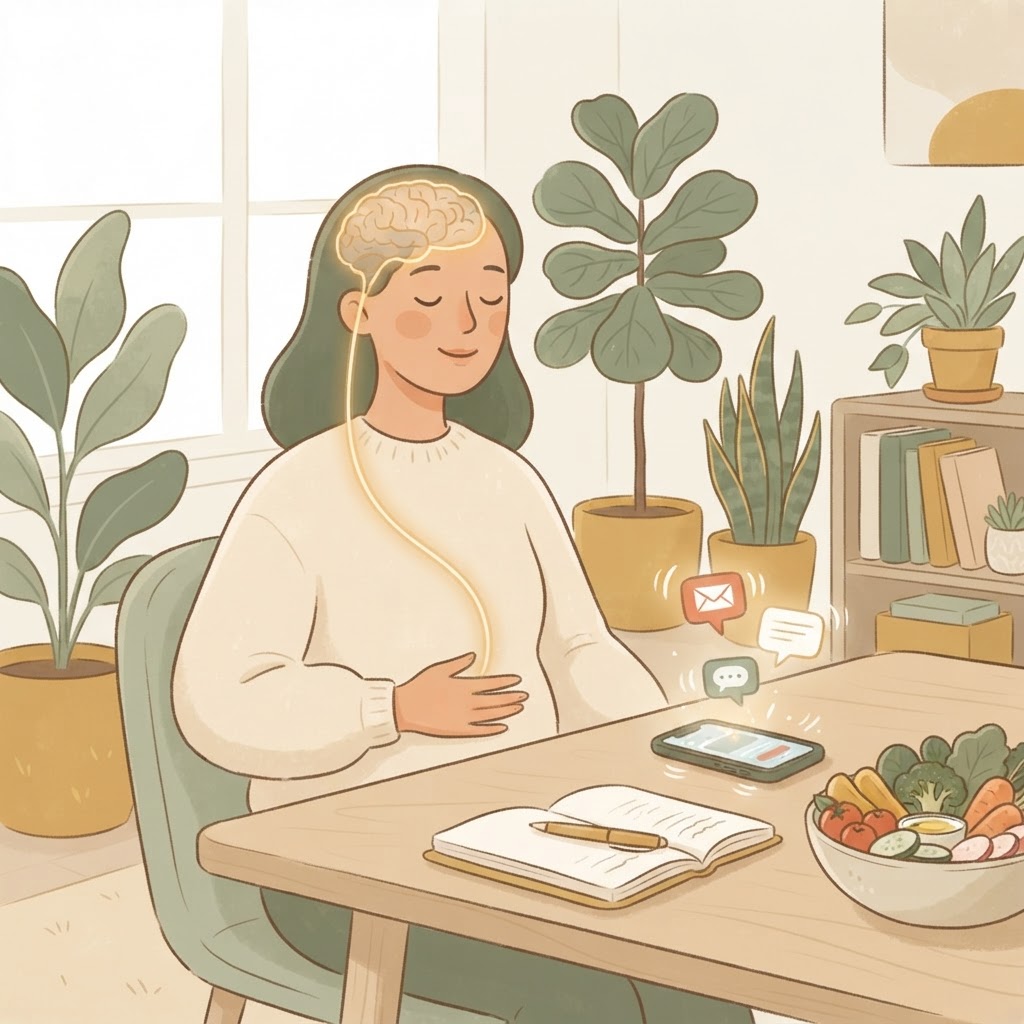
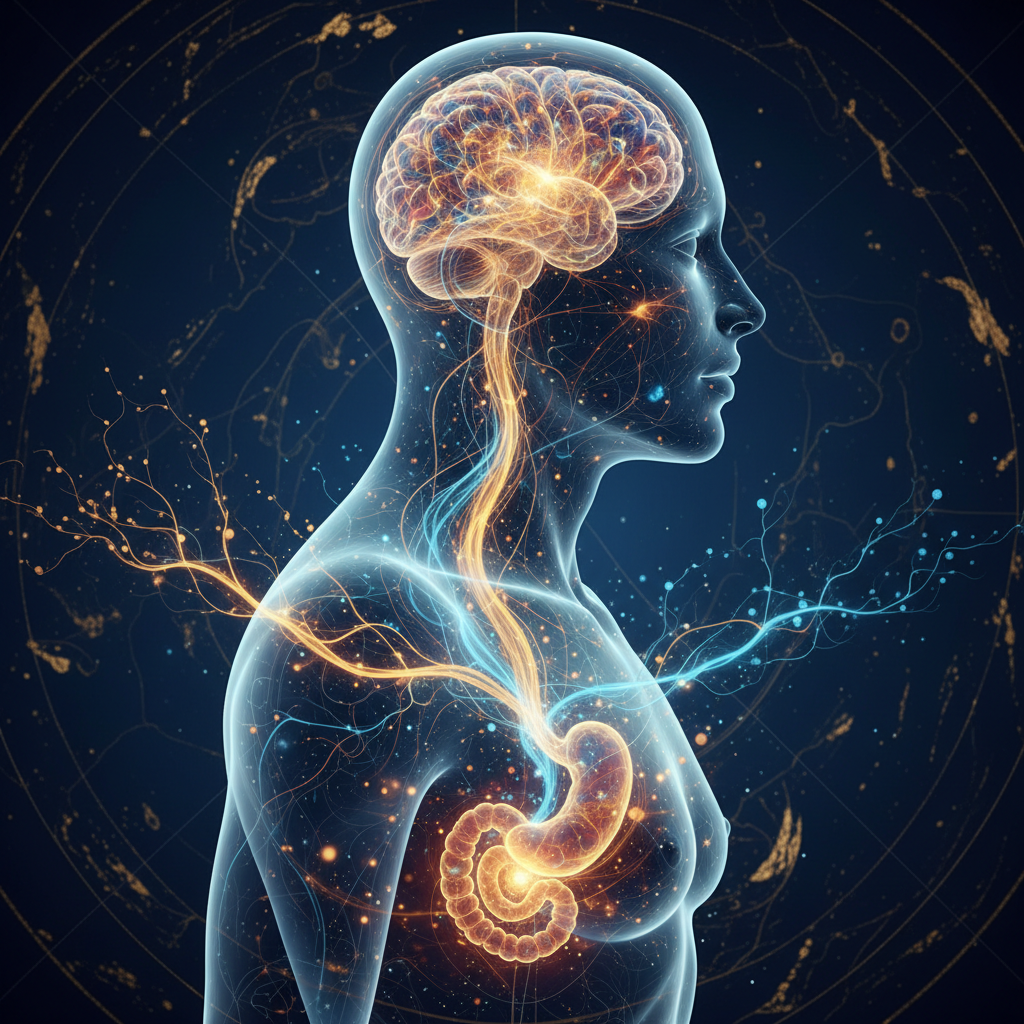
This is the gut-brain axis at work: the two-way communication network linking your digestive system and your brain, running largely through the vagus nerve and immune signalling.
What can help:
- Oily fish such as salmon, mackerel and sardines, for their omega-3 fats
- Magnesium-rich leafy greens, nuts and seeds
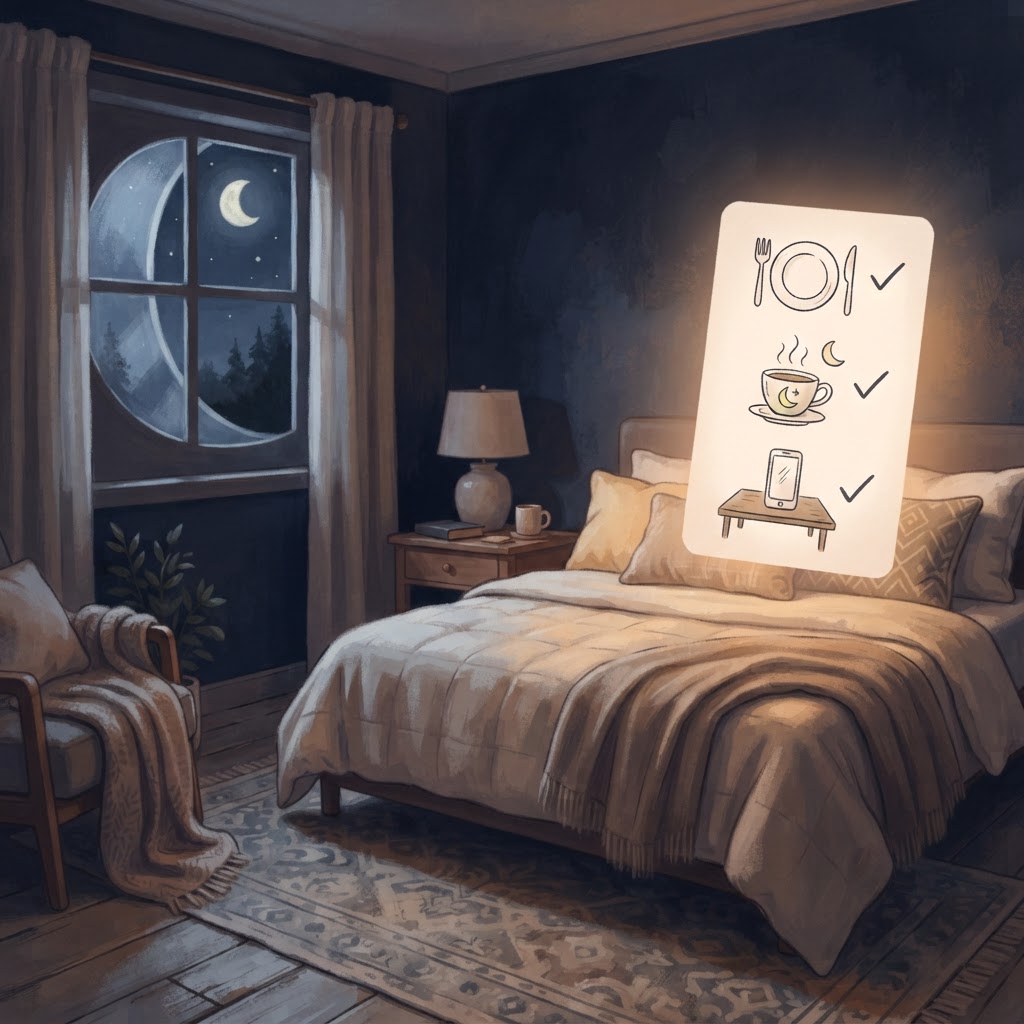
- Finishing eating two to three hours before bed
The fog that won't lift
Struggling to focus, losing your train of thought mid-sentence, feeling like you're wading through treacle: this has a real physical basis.
Long-term exposure to high cortisol is associated with changes in the hippocampus, the brain region central to memory and learning. Meanwhile the amygdala, the brain's threat detector, can become more reactive.
What can help:
- Slow breathing, with your out-breath longer than your in-breath, for a few minutes at a time
- Checking your vitamin D: low levels are common in the UK and are associated with low mood, so it's worth a test rather than guessing
Exhausted but wired
The cruel irony: you're depleted, but the second your head hits the pillow, your brain switches into overdrive. Replaying the day, rehearsing tomorrow, waking at 3am for no obvious reason.
This is hyperarousal: your stress system stuck on "go", even though your body is desperate for rest.
What can help:
- A consistent wind-down routine, with dim light and no screens in the last hour
- Regular bed and wake times
- Sleep-focused or gut-directed hypnotherapy, which has a growing evidence base for calming the body's stress response and improving sleep
What's Happening Inside You
Understanding the mechanism can be steadying, because it replaces "something's wrong with me" with "here's what's happening, and why."
- Your HPA axis, the system that runs your stress response, stops switching off between stressors, keeping cortisol and adrenaline raised.
- Your immune system can become dysregulated, driving low-grade inflammation linked to conditions from heart disease to depression.
- Your gut microbiome can shift out of balance, which is associated with anxiety, low mood and physical symptoms.
- Gene expression can change through epigenetics. Your environment doesn't rewrite your DNA, but it can affect which genes are switched on or off.
None of these systems work alone. Your gut influences your mood. Your immune system influences both. That connection is the whole point.
The ACE Study: Why Early Life Matters
The Adverse Childhood Experiences (ACE) Study, run by the CDC and Kaiser Permanente, is one of the most cited public health studies of the past thirty years.
It found a strong link between the number of difficult experiences in childhood, such as abuse, neglect and household instability, and the likelihood of chronic illness and mental health difficulties in adulthood.
It's worth being precise: the ACE Study shows an association, not simple cause and effect, and some researchers caution against overstating it. What isn't seriously disputed is the broad pattern: early adversity shapes the stress response in ways that can carry forward, and toxic stress is a leading explanation for how.
Trauma researcher Bessel van der Kolk describes trauma not only as something that happened in the past, but as an imprint it leaves on the mind, the brain and the body.
Your Toolkit
Nutrition
Omega-3 fats (oily fish, or walnuts and flaxseed if you don't eat fish), vitamin D, magnesium, B vitamins and zinc all play a role in mood and stress regulation. Try to cut down on ultra-processed food and refined sugar, which can drive blood sugar swings that amplify stress.
Professional support
Talking therapy isn't a last resort. It's one of the best-evidenced options available. CBT and counselling are well established for anxiety and stress. EMDR has a strong evidence base for trauma. Hypnotherapy shows promising results for sleep and anxiety symptoms. In England, you can self-refer to NHS Talking Therapies.
Complementary approaches
Mindfulness, yoga, breathwork and creative therapies all have supporting evidence for calming an over-alert nervous system. None of them need to be perfect or lengthy to help.
Daily foundations
Movement, protected sleep, real social connection and boundaries. These sound basic because they are, but basic doesn't mean unimportant.
A Final Word
If any of this feels familiar, here's what's worth holding onto: toxic stress is a normal nervous system's response to an abnormal amount of pressure. You're not weak, and you're not failing. You're a person who's been carrying too much for too long.
The way out isn't one dramatic fix. It's a five-minute breathing exercise today. Cutting back a little on ultra-processed food. A simple test to check for nutritional gaps, or a GP visit. A first therapy session to see how it feels. Small, repeated signals to your body that it's safe to stand down.
If you'd like to talk about what support might help you, book a free chat with Power Gut.
Frequently Asked Questions
Is toxic stress the same as normal stress? No. Normal stress settles once the trigger passes. Toxic stress is when the stress response has no recovery window and stays switched on.
Can stress really cause gut problems? Yes. Chronic stress can disrupt the gut microbiome, affect how the gut moves and increase gut sensitivity, which is why stress and digestive symptoms so often appear together.
When should I see a GP? If you have ongoing gut symptoms, poor sleep or low mood, speak to your GP. Seek help urgently if you notice blood in your stool, unexplained weight loss, or if you are having thoughts of harming yourself.
This article is for educational purposes only and is not medical advice. Always consult your GP or a qualified healthcare professional about your health.
Want to explore this further?
A free 20-minute chat is available if you'd like to talk through how this relates to your own experience, no pressure, no obligation.
Get the free gut-brain health guide
5 things your doctor hasn't told you about your gut and your brain. Evidence-based, no fluff.
No spam. Unsubscribe anytime. Educational content only.
Related Articles
Have a question? We'd love to hear from you.
Send us a message — we respond within 1–2 working days.