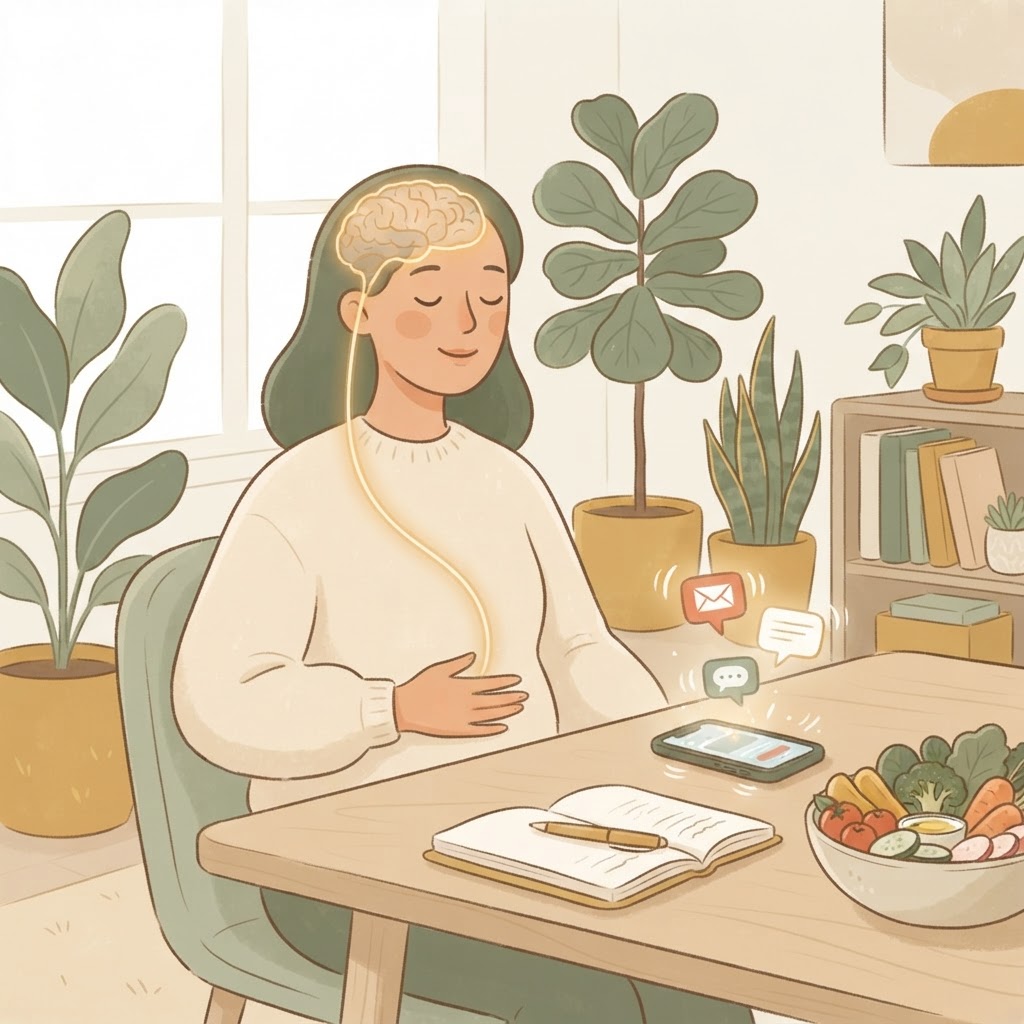
Anxiety Stomach: Why Anxiety Hits Your Gut and What Helps
Knots, nausea, a sudden dash to the toilet — anxiety often shows up in your stomach first. Here's why it happens and what genuinely helps.
It's the morning of the interview. You've slept badly, you can't face breakfast, and your stomach feels like it's tied in a knot. Halfway down the road you're wondering where the nearest toilet is.
Or it's 3am. Nothing has happened, and yet your stomach is churning, tight and unsettled.
If you know these moments, you're not imagining them, and you're far from alone. "Anxiety symptoms" is searched around 74,000 times a month in the UK, and for many people the first symptom isn't a racing mind. It's the gut.
This guide explains why anxiety lands in your stomach, what's happening inside your body, and the practical things that genuinely help.
Quick answer An "anxiety stomach" is real. Your brain and gut are wired together through the vagus nerve and stress hormones. When you feel anxious, your body switches into "fight or flight": it moves blood away from digestion, changes how fast your gut moves and makes your gut more sensitive. That can cause nausea, cramps, butterflies, loss of appetite, diarrhoea or constipation. Slow breathing, regular meals, cutting back on caffeine and talking therapies can all help. If symptoms are new, severe or come with warning signs (listed below), see your GP.
What does an anxiety stomach feel like?
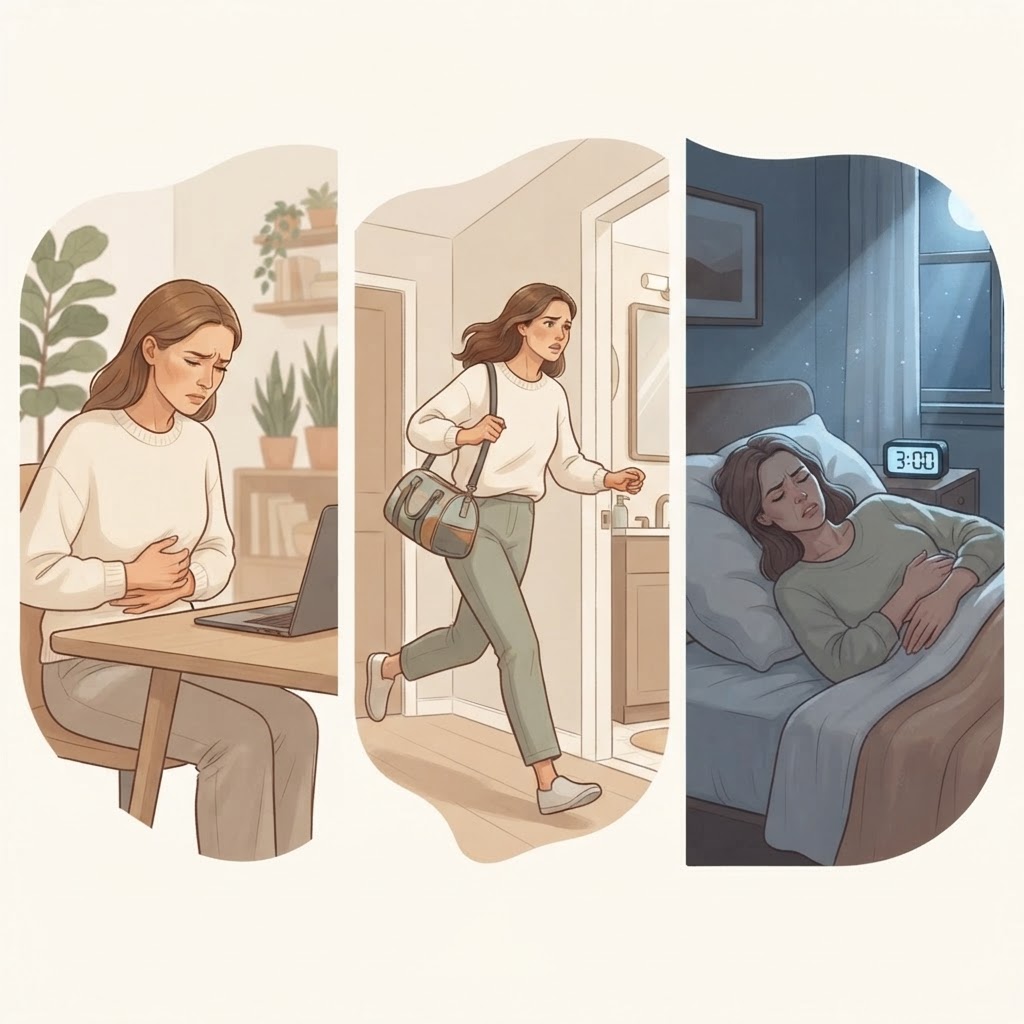
People describe it in many ways:
- Butterflies or a fluttering feeling
- A knot, tightness or heaviness in the stomach
- Feeling sick (nausea), or losing your appetite
- Cramps or stomach ache
- Needing the toilet urgently, or diarrhoea
- Constipation when stress goes on for weeks
- Bloating, wind or a gurgling tummy
- Acid or a burning feeling in the chest
Some people get these symptoms before they even notice they feel anxious. That's one reason anxiety in the gut can be so confusing.
Why anxiety goes straight to your gut
Your gut has its own nervous system
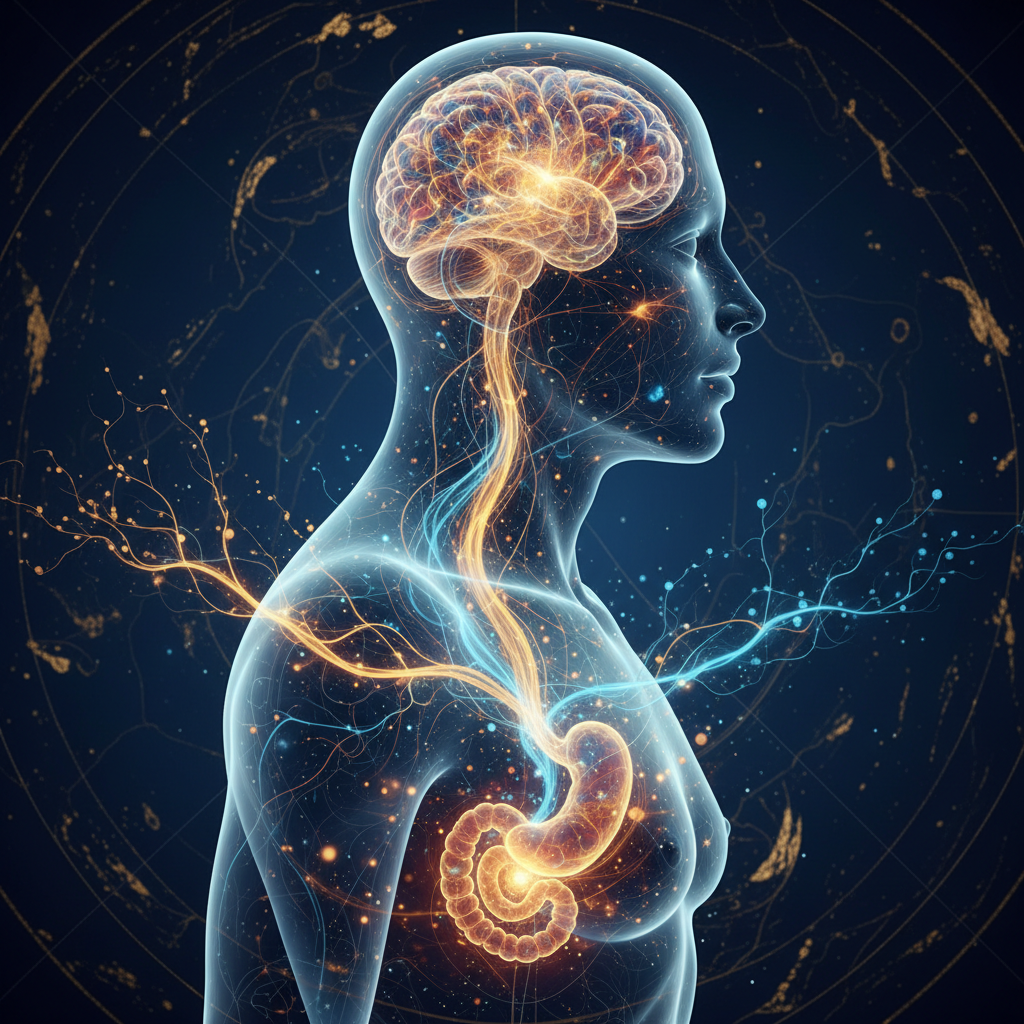
Lining your digestive system is a network of around 500 million nerve cells called the enteric nervous system. Scientists often call it your "second brain". It controls how food moves through you, and it's in constant contact with the brain in your head.
The vagus nerve: a two-way phone line
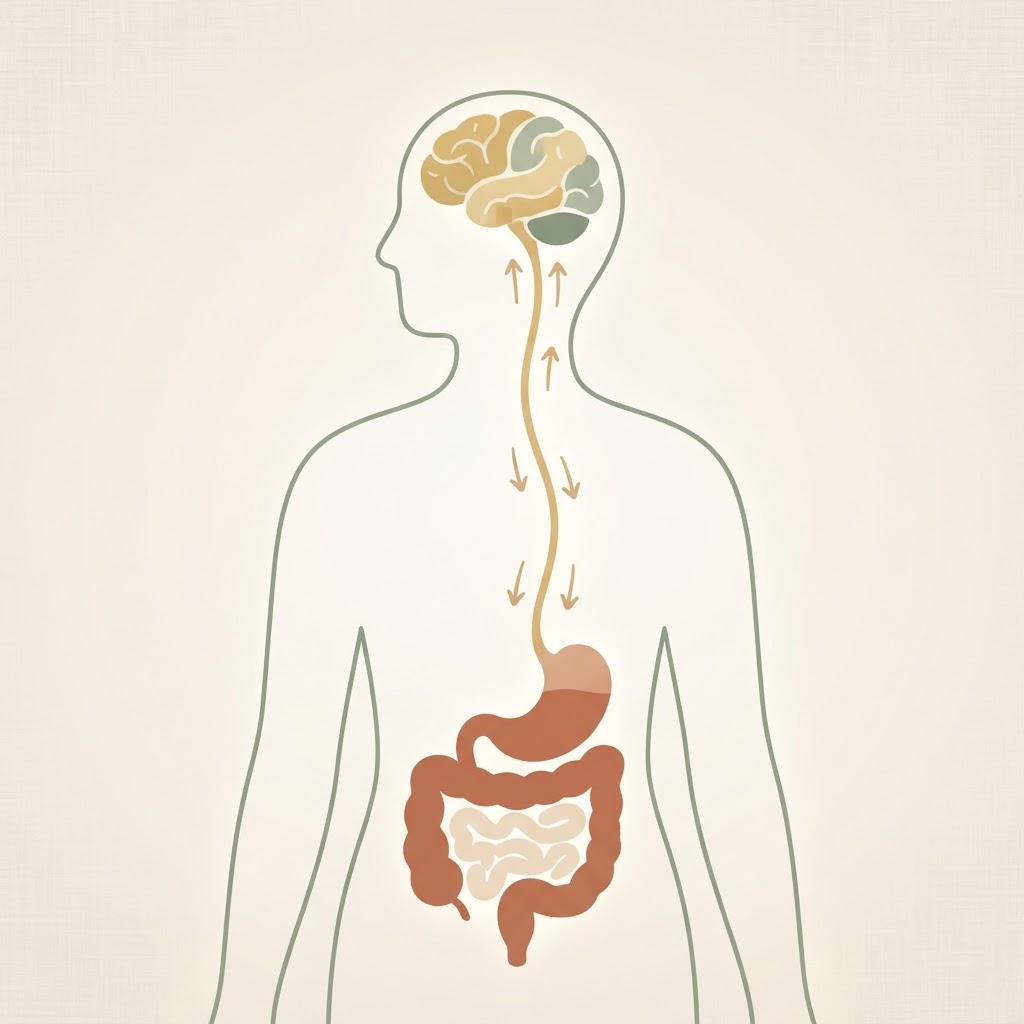
The main connection is the vagus nerve, which runs from your brainstem down to your abdomen. Most of the messages travel upwards, from gut to brain. This is why the link works both ways: a worried mind can unsettle your gut, and an unsettled gut can make you feel more on edge.
Fight or flight
When your brain senses a threat, whether it's a deadline, a difficult conversation or a worry you can't switch off, your body releases stress hormones such as adrenaline and cortisol. This is designed to help you run or fight. To do that, your body:
- Moves blood away from digestion, towards your muscles
- Slows your stomach, which is why you might feel full or sick
- Speeds up the lower gut, which is why some people need the toilet urgently
- Turns up gut sensitivity, so normal sensations feel uncomfortable
Once the moment passes, everything should settle. The problem comes when anxiety becomes the background noise of daily life and your body rarely gets the signal that it's safe to stand down.
Anxiety and IBS: a common pairing
Anxiety and irritable bowel syndrome (IBS) often travel together. IBS is now understood as a disorder of how the gut and brain communicate.
In one large UK clinic study of 1,000 people with hard-to-treat IBS, 63% had anxiety before treatment. After a 12-session course of gut-focused hypnotherapy, that dropped to 34%.
This doesn't mean anxiety causes IBS, or that every anxious stomach is IBS. But it shows how closely the two are linked, and why approaches that address stress and digestion together are often recommended. Gut-focused hypnotherapy and CBT are included in NICE guidance for IBS as management options, not as a cure, and they sit alongside medical care rather than replacing it.
What helps: practical steps you can start today
1. Breathe out for longer than you breathe in
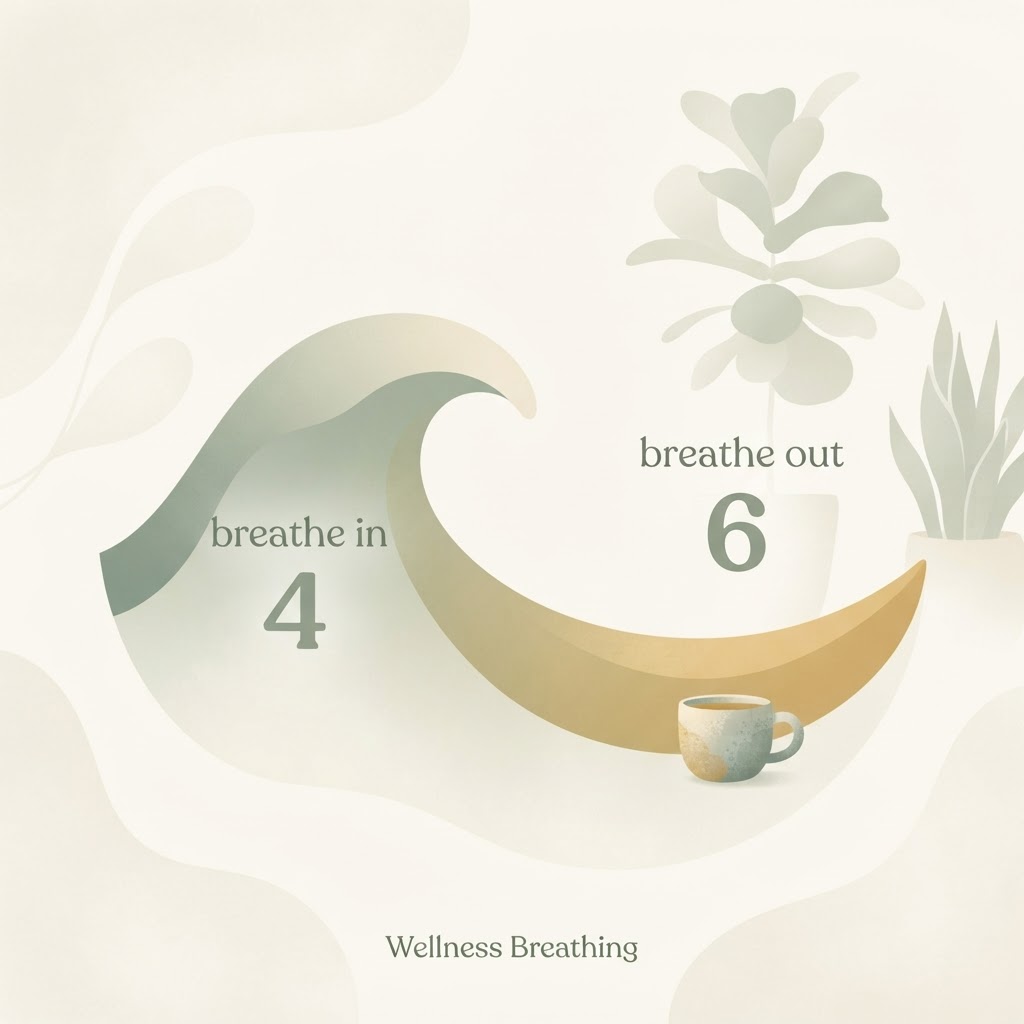
Slow breathing is one of the quickest ways to signal "safe" to your nervous system. Try this for 2 to 3 minutes:
- Breathe in gently through your nose for a count of 4
- Breathe out slowly through your mouth for a count of 6
It's a good one to use before meals, meetings or bed.
2. Ground yourself with your senses
When your mind is racing, name 5 things you can see, 4 you can hear, 3 you can touch, 2 you can smell and 1 you can taste. It brings your attention back to the present moment.
3. Don't skip meals
An empty stomach plus anxiety often means more nausea and acid. Small, regular meals are gentler: porridge, toast, bananas, soup or rice.
4. Go easy on the triggers
Coffee, energy drinks, alcohol, very spicy or fatty food, and fizzy drinks can all make an anxious stomach worse. You don't have to give them up for good. Just notice what makes a difference for you.
5. Move a little
A 10-minute walk helps burn off stress hormones and gets your digestion moving.
6. Protect your sleep
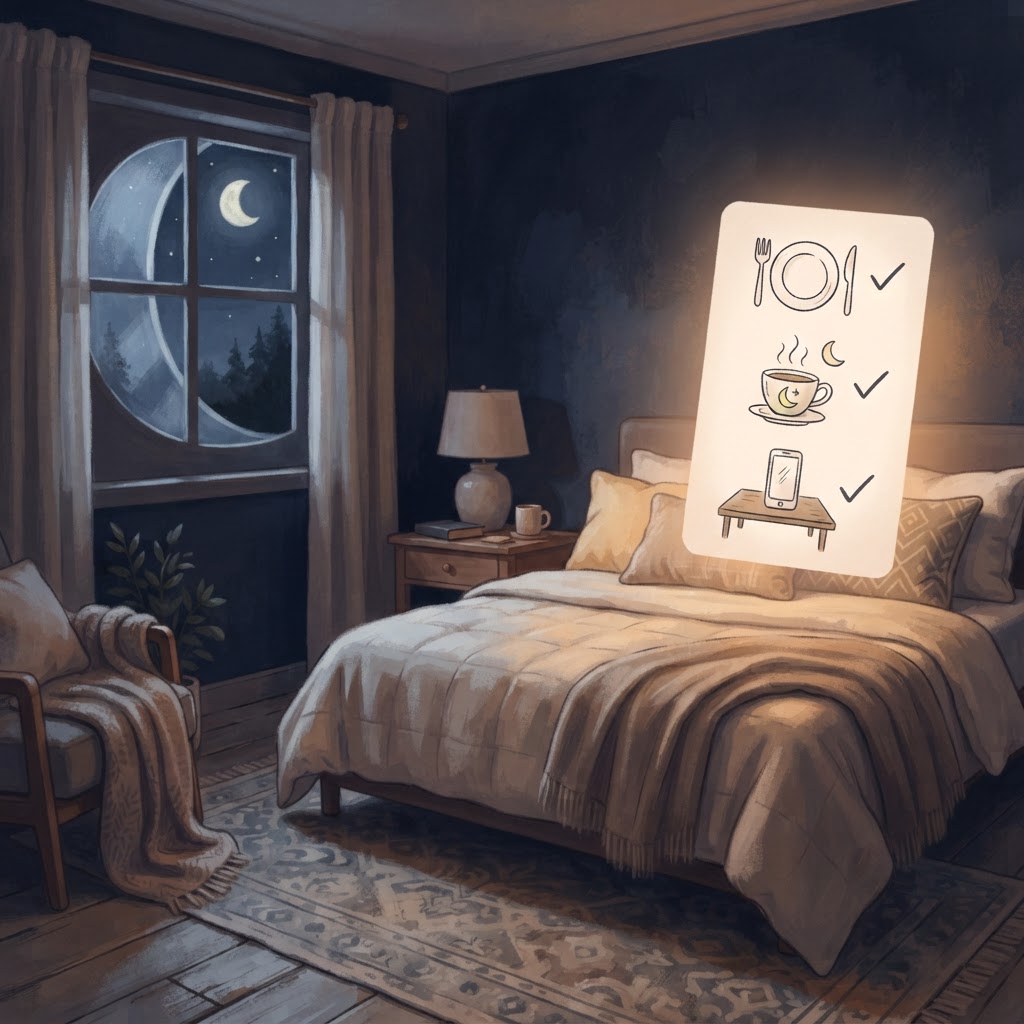
Tiredness makes both anxiety and gut sensitivity worse. Try to keep regular sleep and wake times, and put screens away an hour before bed.
7. Keep a simple diary for two weeks
Write down when symptoms happen, what you ate, and what was going on. Patterns often appear, and the diary is very useful if you see your GP.
Support that can help
Talking therapies
CBT (cognitive behavioural therapy) and counselling are well-established options for anxiety. In England, you can refer yourself to NHS Talking Therapies without seeing your GP first.
Gut-directed hypnotherapy
Gut-directed hypnotherapy uses deep relaxation and focused suggestions to calm the gut-brain connection. NICE includes psychological therapies, including hypnotherapy, for people whose IBS symptoms continue despite first-line treatment. The largest trial so far, in Manchester with 448 patients, found very good results.
How Power Gut can support you
If anxiety and your stomach keep feeding each other, you don't have to work it out alone.
- Gut-directed hypnotherapy: live online sessions with a qualified, registered clinical hypnotherapist (for ages 16 and over).
- Finding a counsellor: we can help you find a qualified, registered counsellor who suits your needs.
- A free 20-minute chat: no payment and no pressure. Just a conversation about what's going on and what might help.
Explore support options or book your free chat.
When to see a GP
Anxiety can cause real gut symptoms, but it's important not to assume that's always the reason. See your GP if you have:
- Blood in your poo, or black, tarry poo
- Unexplained weight loss
- A change in your bowel habits lasting more than a few weeks, especially if you're over 50
- Pain that is severe, getting worse, or wakes you at night
- Difficulty swallowing, or vomiting that won't stop
- A family history of bowel cancer, coeliac disease or inflammatory bowel disease
Your GP can check for other causes and talk through treatment options.
If you need help now
- In an emergency, or if someone's life is at risk: call 999
- Mental health crisis (England): call NHS 111 and select option 2, 24 hours a day
- Samaritans: call 116 123, free, any time
- Shout: text SHOUT to 85258, free, 24/7 text support
Free resources
- NHS: Generalised anxiety disorder in adults
- NHS Talking Therapies: Find a service and refer yourself
- Mind: Anxiety and panic attacks
- Anxiety UK: anxietyuk.org.uk
- Guts UK: IBS information
- The IBS Network: theibsnetwork.org
Frequently asked questions
Can anxiety really cause stomach problems? Yes. Anxiety triggers stress hormones and nerve signals that change how your gut moves and how sensitive it feels. This can cause nausea, cramps, diarrhoea, constipation and bloating.
How do I know if it's anxiety or something else? You can't always tell on your own. If symptoms are new, persistent, or come with any warning signs above, see your GP to rule out other causes.
How long does an anxiety stomach last? For short-term stress, symptoms usually settle once the moment passes. If anxiety is ongoing, symptoms can come and go for weeks. That's a sign it's worth getting support.
What should I eat when anxiety upsets my stomach? Small, plain, regular meals are usually easiest: porridge, toast, rice, bananas, soup and plenty of water. Limit caffeine, alcohol and very rich food until things settle.
Does hypnotherapy help anxiety stomach? Gut-directed hypnotherapy has good evidence for IBS, and studies show it can also reduce anxiety in people with IBS. It isn't right for everyone, which is why we always start with a conversation.
This article is for educational purposes only and is not medical advice. It does not replace a diagnosis or treatment from your GP or a qualified health professional.
Want to explore this further?
A free 20-minute chat is available if you'd like to talk through how this relates to your own experience, no pressure, no obligation.
Get the free gut-brain health guide
5 things your doctor hasn't told you about your gut and your brain. Evidence-based, no fluff.
No spam. Unsubscribe anytime. Educational content only.
Related Articles
Have a question? We'd love to hear from you.
Send us a message — we respond within 1–2 working days.