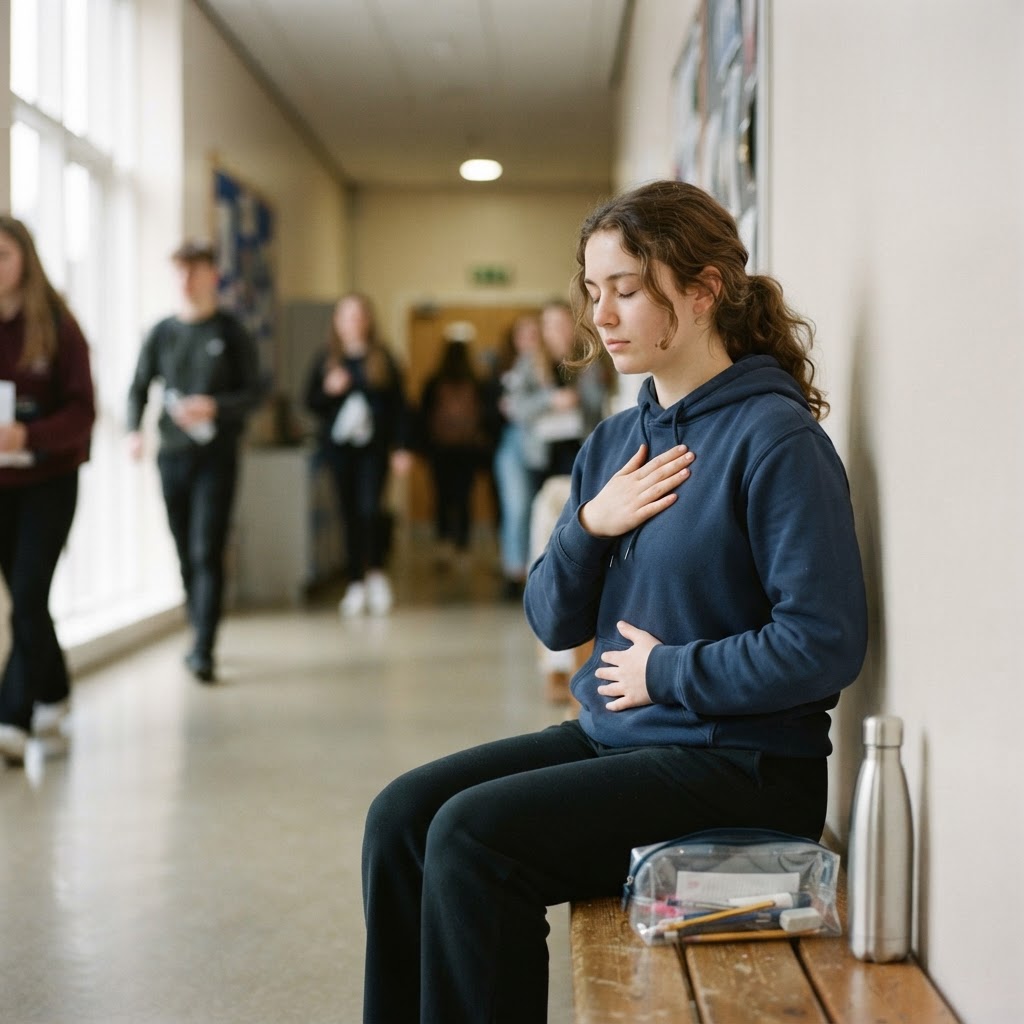
Exam Stress and Stomach Aches: Why Your Gut Panics (and How to Calm It)
Butterflies, cramps, needing the loo before every exam? Why stress hits your gut, a simple exam-season plan, a breathing trick for the exam hall, and how hypnotherapy can help.
Your stomach drops when you see the timetable. You can't face breakfast on exam morning. And you need the loo, again, five minutes before you walk into the hall.
If exams do this to your gut, you're in very good company.
Between April 2024 and March 2025, Childline delivered 1,647 counselling sessions where young people talked about exam or revision stress. In May alone, the busiest exam month, there were 359. Many said they were losing sleep over it.
Here's the good news: a stressed-out stomach isn't a sign that something is wrong with you. It's your body doing exactly what it was designed to do, just at a slightly inconvenient moment. And there's a lot you can do about it.
Why exams hit your gut
Your gut and brain are wired together through a huge network of nerves, often called the gut-brain axis.
When you feel under pressure, your brain switches on its "fight or flight" mode. Your body releases adrenaline and cortisol to get you ready to face danger. That's brilliant if you're running from a bear. Less helpful in a sports hall with a calculator.
In fight-or-flight mode:
- Blood moves away from your gut towards your muscles, so digestion slows down.
- Your gut can speed up or slow down, which is why some people need the loo urgently and others get constipated.
- Your stomach muscles tense, causing cramps, nausea or that "knot" feeling.
- Your gut becomes more sensitive, so normal feelings can feel uncomfortable.
That's the "butterflies" feeling. It's real, it's physical, and it's very common. We go deeper in Anxiety Stomach: Why Anxiety Hits Your Gut.
Your exam-season gut plan
Small habits, done consistently, make the biggest difference. Here's what helps, from the weeks before right through to the exam itself.
In the weeks before
- Keep regular meals. Skipping meals and then grazing on snacks late at night is hard on your gut. Aim for three meals a day at roughly the same times.
- Protect your sleep. Tiredness makes your gut more sensitive and your stress louder. Cramming until 2am usually costs more than it gains. Our sleep guide has easy ideas.
- Move every day. A 20-minute walk, a kickabout or a dance round your room helps burn off stress hormones and keeps your gut moving.
- Watch the energy drinks. Lots of caffeine can make your heart race, your hands shake and your gut churn. It also wrecks sleep.
- Take proper breaks. Short breaks help you remember more, and give your nervous system a chance to settle.
The night before
- Eat a normal, familiar dinner. Not the night for a new curry.
- Pack your bag early, so you're not hunting for a calculator at 8am.
- Put your notes away at least an hour before bed. Try a warm shower, music or something light to watch.
Exam morning
- Eat something, even if it's small. A slice of toast, a banana, porridge or a yoghurt. An empty stomach can make nausea and shakiness worse.
- Sip water, rather than gulping a whole bottle just before you go in.
- Give yourself time for the loo. Arrive a little early so you're not rushing.
- Skip last-minute cramming with friends if it winds you up. It's fine to stand a bit apart and put your headphones in.
In the exam hall
Try this simple breathing exercise. It sends a "you're safe" signal to your nervous system:
Breathe in gently through your nose for a count of 4. Breathe out slowly through your mouth for a count of 6. Repeat 5 times.
A longer out-breath is thought to activate the vagus nerve, the main nerve linking your brain and gut, helping your body ease out of fight-or-flight mode. You can do it silently at your desk and nobody will notice.
Also try: dropping your shoulders, unclenching your jaw and pressing your feet into the floor. Tension hides in muscles, and letting it go can ease your stomach too.
If your gut struggles every exam season
Some students already have a gut condition, such as a diagnosed IBS, that flares up badly under stress. If that's you, you may be able to get access arrangements for exams, such as supervised rest breaks. Speak to your school or college exams officer or SENCo early, as you'll usually need evidence from your GP.
How hypnotherapy can help
Breathing exercises are a great start. But if stress hits your gut hard, or keeps coming back, it can help to go a little deeper.
Clinical hypnotherapy uses guided deep relaxation and focused attention. It's not about losing control or being made to do anything. You stay aware the whole time. Many people describe it as feeling calm and heavy, like the moment just before you fall asleep.
Sessions can help you:
- Calm your nervous system, so your body spends less time stuck in fight-or-flight
- Release muscle tension, including the tight, clenched feeling in your stomach
- Practise feeling calm about exams ahead of time, so the real day feels more familiar
- Learn simple self-hypnosis techniques to use at home and before exams
There's good evidence for the gut, too. NICE, which writes health guidance for the NHS, says that people with IBS that hasn't improved after 12 months of medicines should be considered for psychological therapies, including hypnotherapy.
Hypnotherapy isn't a cure-all, and it doesn't replace medical care. But many people find it a helpful way to feel calmer in body and mind.
Power Gut offers clinical and gut-directed hypnotherapy for anyone aged 16 and over, including A-level, college and university students. Start with a free 20-minute chat to see if it feels right for you. No payment and no pressure.
Under 16? Our sessions are for people aged 16 and over. If you're younger, please talk to a parent, your GP or your school counsellor. You can also contact Childline free on 0800 1111, any time, or visit YoungMinds for advice.
When to see your GP
Exam nerves usually ease once exams are over. See your GP if:
- tummy pain or bowel changes carry on outside exam time
- pain wakes you up at night
- you notice blood in your poo
- you're losing weight without trying, or being sick a lot
- stress or worry is taking over your life, or you're struggling to cope
If you ever feel overwhelmed or unsafe, talk to someone you trust straight away, call NHS 111, or contact Samaritans free on 116 123.
Quick answers
Why does my stomach hurt before exams? Stress switches on your "fight or flight" response, which tenses your stomach muscles and changes how fast your gut works. It's very common and usually eases when the stress passes.
Why do I need the toilet so much before an exam? Adrenaline can speed up your gut. Arriving early, sipping rather than gulping water, and slow breathing all help.
What should I eat on exam day? Something familiar and gentle, like toast, porridge, a banana or yoghurt. Avoid big, greasy or very spicy meals, and go easy on energy drinks.
Can hypnotherapy help with exam stress? Hypnotherapy can help some people feel calmer and more relaxed, and NICE recommends it as an option for IBS that hasn't improved with medicines. It works best alongside good sleep, food and study habits.
More help: Childline: Exam stress · YoungMinds · Student Minds · NHS: Stress
This article is for education only and isn't medical advice. Please speak to your GP or a qualified health professional about your own health.
This article is for educational purposes only and does not constitute medical advice. Always consult your GP or a qualified healthcare professional for personal medical guidance.
Want to explore this further?
A free 20-minute chat is available if you'd like to talk through how this relates to your own experience, no pressure, no obligation.
Get the free gut-brain health guide
5 things your doctor hasn't told you about your gut and your brain. Evidence-based, no fluff.
No spam. Unsubscribe anytime. Educational content only.
Related Articles

Burnout Symptoms: What Burnout Does to Your Body and Gut
6 min read
Modern Life, Stress, and Your Gut: Why It Happens and How to Find Relief
9 min read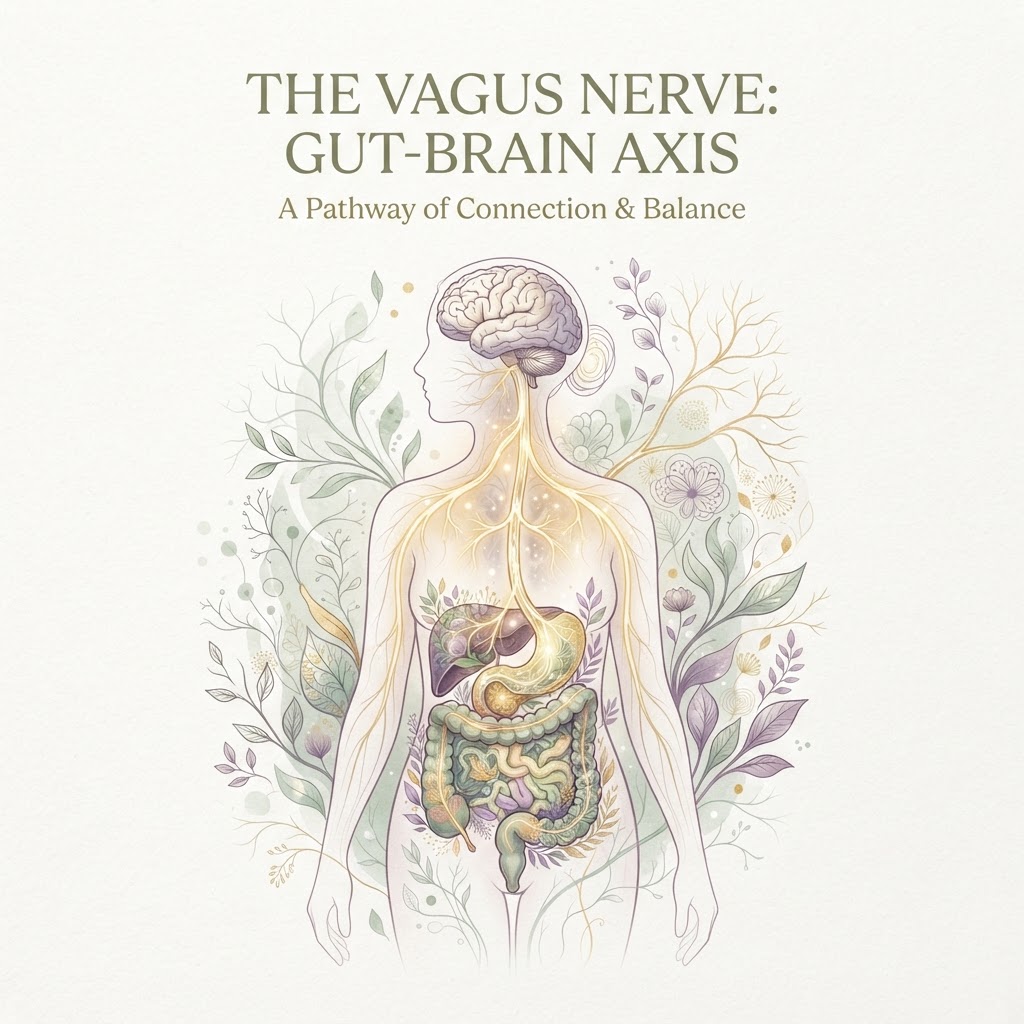
The Shame We Don't Talk About: When Your Gut Takes Over Your Life
9 min readHave a question? We'd love to hear from you.
Send us a message — we respond within 1–2 working days.