The Shame We Don't Talk About: When Your Gut Takes Over Your Life
The science of how stress physically disrupts your gut — and what the NHS and NICE guidelines actually recommend to address it.
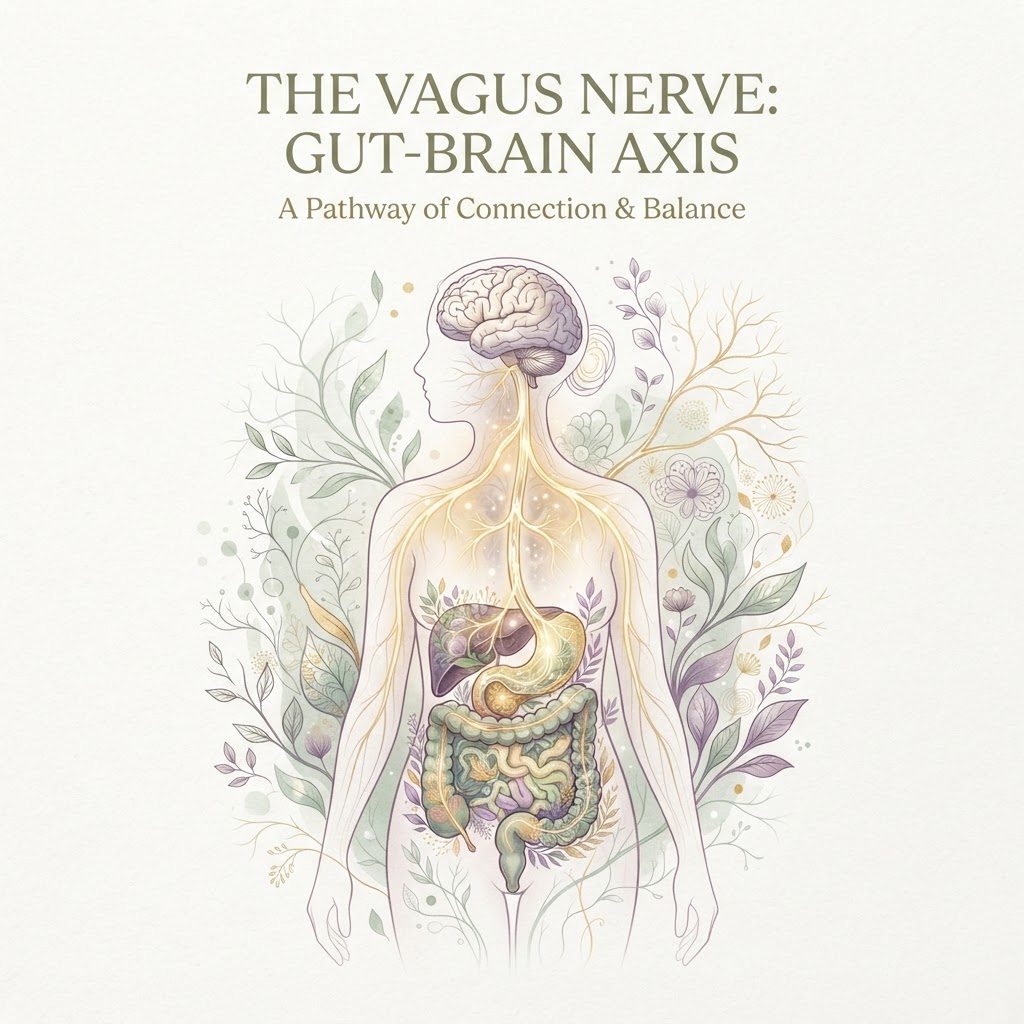
There is a large nerve called the vagus nerve that runs from your brain all the way down to your digestive system. Think of it as a busy two-way road. Your brain sends signals down, and your gut sends signals up. When you're calm, the traffic flows smoothly. When you're stressed, it's like rush hour with sirens.
Here is what some of the most cited studies have found about what stress does to the gut physically.
Stress Changes How Your Gut Moves
Food might rush through too fast, or slow down to a near halt. This isn't random. It's a direct result of stress signals hitting the digestive tract.
The Rome Foundation, a global authority on gut-brain disorders, puts it plainly: stress "can affect movement and contractions of the GI tract."
Stress Turns Up the Volume on Pain
Under ongoing stress, the brain can start interpreting normal gut sensations as painful. A small amount of gas or a mild contraction that a relaxed person wouldn't notice becomes genuinely painful.
This phenomenon, called visceral hypersensitivity, was documented by a Swedish research team led by Dr. Iris Posserud. Their study, published in the journal Gastroenterology in 2007, established that altered rectal perception is common in IBS and is associated with gastrointestinal symptom severity — particularly pain and bloating.
Stress Can Make the Gut Lining More Permeable
You may have heard the term "leaky gut." While the science is more nuanced than popular media suggests, researchers at the University of Leuven in Belgium, led by Dr. Tim Vanuytsel, showed something remarkable in a 2014 clinical trial. They demonstrated that even acute psychological stress releases a hormone called CRH, which temporarily increases the permeability of the small intestinal lining in humans. Their findings were published in Gut, one of the world's leading gastroenterology journals.
Stress Reshapes the Gut Microbiome
Your gut is home to trillions of bacteria, collectively called the microbiome. This ecosystem is not fixed; it responds to your emotional state. A 2017 review by Foster, Rinaman and Cryan, published in Neurobiology of Stress, concluded that "the gut microbiota has been implicated in a variety of stress-related conditions including anxiety, depression and irritable bowel syndrome."
When the Loop Gets Stuck
When these stress responses fire occasionally, the body recovers. But when they fire repeatedly over months and years, the brain-gut loop can get stuck in a heightened state. Researchers now classify conditions like Irritable Bowel Syndrome (IBS) as Disorders of Gut-Brain Interaction (DGBI) — acknowledging that both ends of the connection are involved.
Over time, the nervous system can enter a state of "central sensitisation," where it remains on high alert even when no immediate stress is present. People often begin cutting out more and more foods, avoiding social occasions, and feeling increasingly isolated. The physical and emotional become deeply intertwined.
Diet matters. But when the root driver is a sensitised brain-gut loop, addressing the neural pathway directly becomes an essential part of the solution.
What the UK's Official Health Guidelines Recommend
If you've been living with gut symptoms for a long time — typically 12 months or more — and changes to diet and standard medications haven't brought enough relief, the National Institute for Health and Care Excellence (NICE) and the NHS point to something important: psychological interventions.
These are not alternative therapies. They are evidence-based approaches with substantial research behind them. Two are particularly prominent in the clinical guidelines.
Cognitive Behavioural Therapy (CBT)
CBT is a practical, structured form of talking therapy. It helps you notice the connections between your thoughts, your feelings, and your physical body. By gently shifting unhelpful thought patterns — like catastrophising about a flare-up — CBT can reduce the mental load that makes gut symptoms worse. It is widely available on the NHS through the Talking Therapies service, and you can often self-refer.
Gut-Directed Hypnotherapy
This is a focused clinical approach that uses guided relaxation and specific, gentle suggestion to help restore healthier communication along the brain-gut axis. It is important to say clearly what this is not: it is not stage hypnosis. There is no swinging watch, no loss of control. You remain fully aware and in charge throughout.
NICE guidelines include hypnotherapy as a treatment option for IBS. On the NHS, it is often delivered through specialist centres such as the Royal London Hospital for Integrated Medicine in London.
The Evidence Behind Gut-Directed Hypnotherapy
The foundation of modern gut-directed hypnotherapy comes from the work of Professor Peter Whorwell and his team in Manchester. In a landmark study published in The Lancet in 1984, they treated patients with severe, treatment-resistant IBS using a structured hypnotherapy protocol. The results were striking: the hypnotherapy patients showed a dramatic improvement in all features, with no relapses recorded during the 3-month follow-up period.
Since then, multiple studies have reinforced these findings. A 2016 systematic review and meta-analysis published in Clinical Gastroenterology and Hepatology concluded that psychological therapies reduce GI symptoms in adults with IBS, with effects that remained significant and medium in magnitude after both short-term and long-term follow-up periods.
As with all medical research, individual results vary, and these outcomes were achieved within specific clinical protocols. But the evidence base is robust and growing.
A Word on an Old Stigma
For many people, the word "hypnotherapy" still conjures images from television and theatre. This is unfortunate, because it discourages people from accessing a legitimate, research-backed clinical tool. Gut-directed hypnotherapy is best understood not as something mystical, but as a way of guiding the brain into a state where it can form new, healthier response patterns — what neuroscientists call neuroplasticity.
The intervention does not claim to fix the gut directly. It works by helping the brain reinterpret the signals arriving from the gut, dialling down the hypersensitivity that causes so much distress.
What to Do If This Resonates With You
If you recognise yourself in these descriptions, the most important step is to speak with your GP. They can help rule out other conditions and talk you through your options, including whether a referral for CBT or gut-directed hypnotherapy might be appropriate for your circumstances.
Living with a reactive, emotional gut can feel isolating. But the science is clear: the connection between your brain and your digestive system is real, measurable, and — most importantly — changeable. With the right support, the conversation between your brain and your gut can become a calmer, kinder one.
A Note on Finding a Qualified Professional
If you are considering gut-directed hypnotherapy privately, it is simply worth bearing in mind that this is a specialist clinical skill. Checking that your practitioner has undergone recognised, specific training in this approach matters for both safety and effectiveness — and any reputable professional will be open and happy to discuss their qualifications with you.
This article is for educational purposes only and does not constitute medical advice. Always consult your GP or a qualified healthcare professional for personal medical guidance.
Want to explore this further?
A free 20-minute chat is available if you'd like to talk through how this relates to your own experience, no pressure, no obligation.
Share this article
Have a question? We'd love to hear from you.
Send us a message — we respond within 1–2 working days.