Your Gut Is Talking to Your Brain — Here's What It's Saying About Your Anxiety and Sleep
Explore the vital connection between gut health and mental well-being. Understand how your diet and the vagus nerve shape your anxiety and sleep patterns.
Do you remember a time your stomach churned before a big event? That feeling arrived before your brain had time to think. That is your gut talking to your brain.
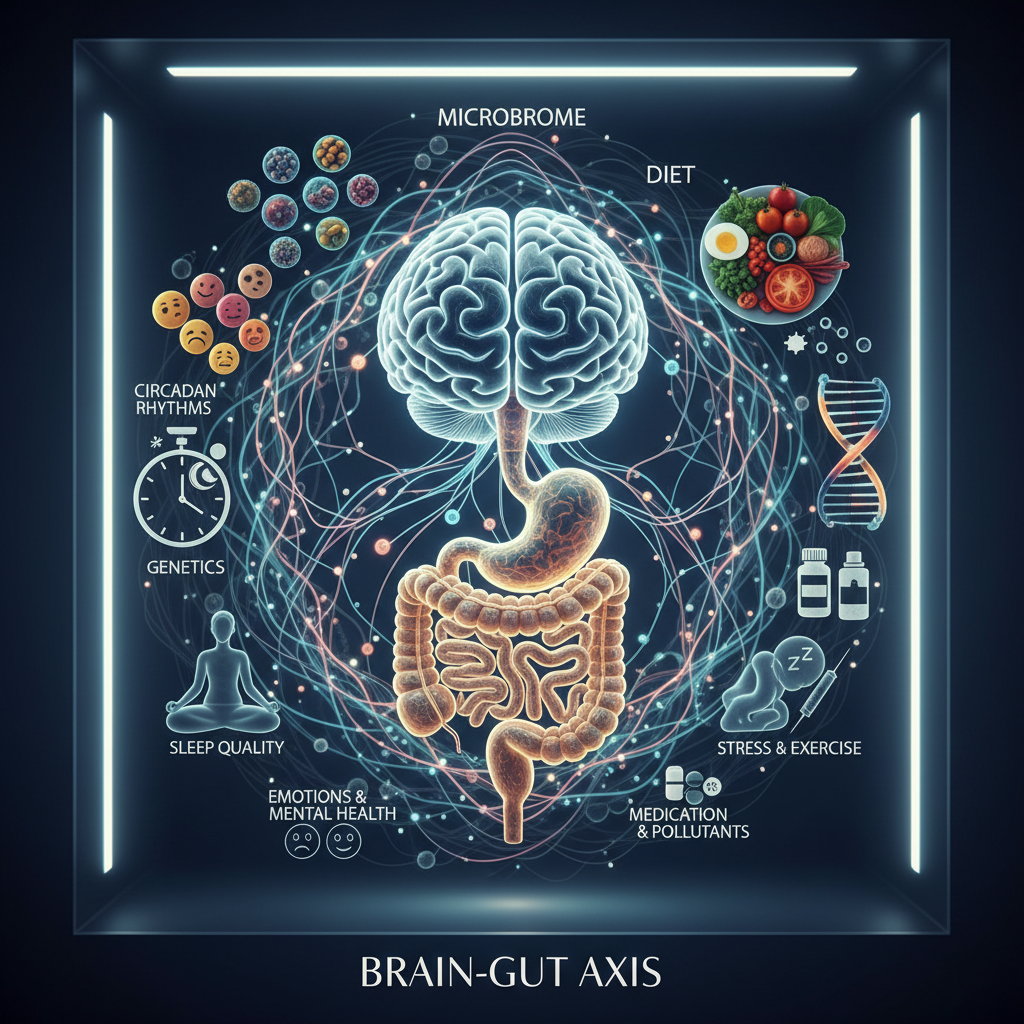
Scientists call this the gut-brain axis. It is a two-way street: your gut health affects your mood, and your mood affects your gut. This article explains how, and what it means for anxiety and sleep.
Your Second Brain
Your gut has its own nervous system, called the enteric nervous system (ENS). It contains hundreds of millions of nerve cells and can work on its own. That is why it is often called your "second brain".
Here is a key fact: around 90% of your body's serotonin is made in your gut. Serotonin is a chemical messenger linked to mood. Gut serotonin does not travel into your brain, but it affects how your gut works and sends signals along the vagus nerve. Those signals help shape how your brain feels.
When your gut is unsettled, these signals change. Your brain can shift from feeling calm to feeling on alert. This is not a metaphor; it is real biology.
How Your Gut and Brain Chat
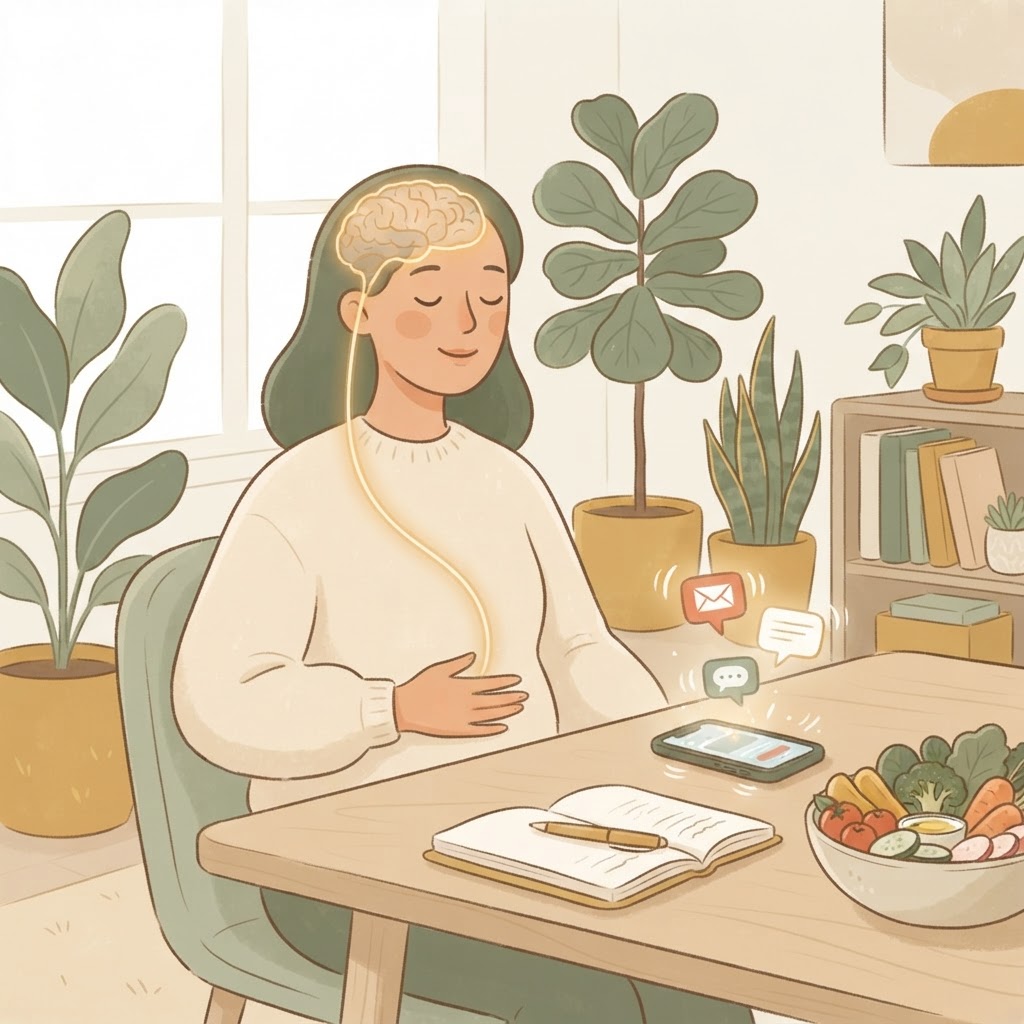
Think of the vagus nerve as a long cable running from your brain down to your gut. It carries messages in both directions.
From the gut up: when your gut is irritated or inflamed, signals travel up to the brain. You might feel foggy, tired or low.
From the brain down: when you feel stressed, your brain sends signals down to your gut. This changes how your gut moves, can increase stomach acid, and may affect your gut lining.
Your gut is also home to trillions of bacteria, your microbiome. They act like tiny chefs, breaking down fibre and making useful by-products called short-chain fatty acids, such as butyrate. These are not waste. They help protect your gut lining and calm inflammation, which matters for your brain too.
The Anxiety Connection
Anxiety used to be described simply as a "chemical imbalance" in the brain. Newer science shows a bigger picture.
Your gut bacteria follow a daily rhythm, just like you. Late-night eating, shift work and too much screen time late at night can disrupt that rhythm. Research has found that people with anxiety and depression often have different patterns of gut bacteria compared with people without these conditions. Some studies also suggest certain probiotics may help reduce anxiety symptoms, although more research is needed.
This is why looking after your gut can support your mind. It is not a replacement for therapy or medication, but it can be a helpful partner.
The Sleep Connection
Sleep and the gut affect each other. Poor sleep can upset the balance of your gut bacteria, and an unsettled gut can make it harder to sleep well. Stress sits in the middle of this loop, keeping your nervous system alert when your body needs to rest.
The Future: Personalised Gut Health
Scientists are now using computer analysis, including artificial intelligence, to study patterns in gut bacteria. The hope is that one day your own gut profile could help guide which diet or treatment works best for you. This research is still at an early stage, but it is moving quickly.
Three Simple Steps for UK Readers
- Eat more fibre. Swap white bread for wholegrain or rye, add oats, and include vegetables like carrots, broccoli and leeks. Fibre feeds your beneficial gut bacteria. Some studies have found that people who eat more fibre tend to have lower rates of depression.
- Try fermented foods. A small pot of kefir or live yoghurt each day is easy to find in UK supermarkets and may help diversify your microbiome.
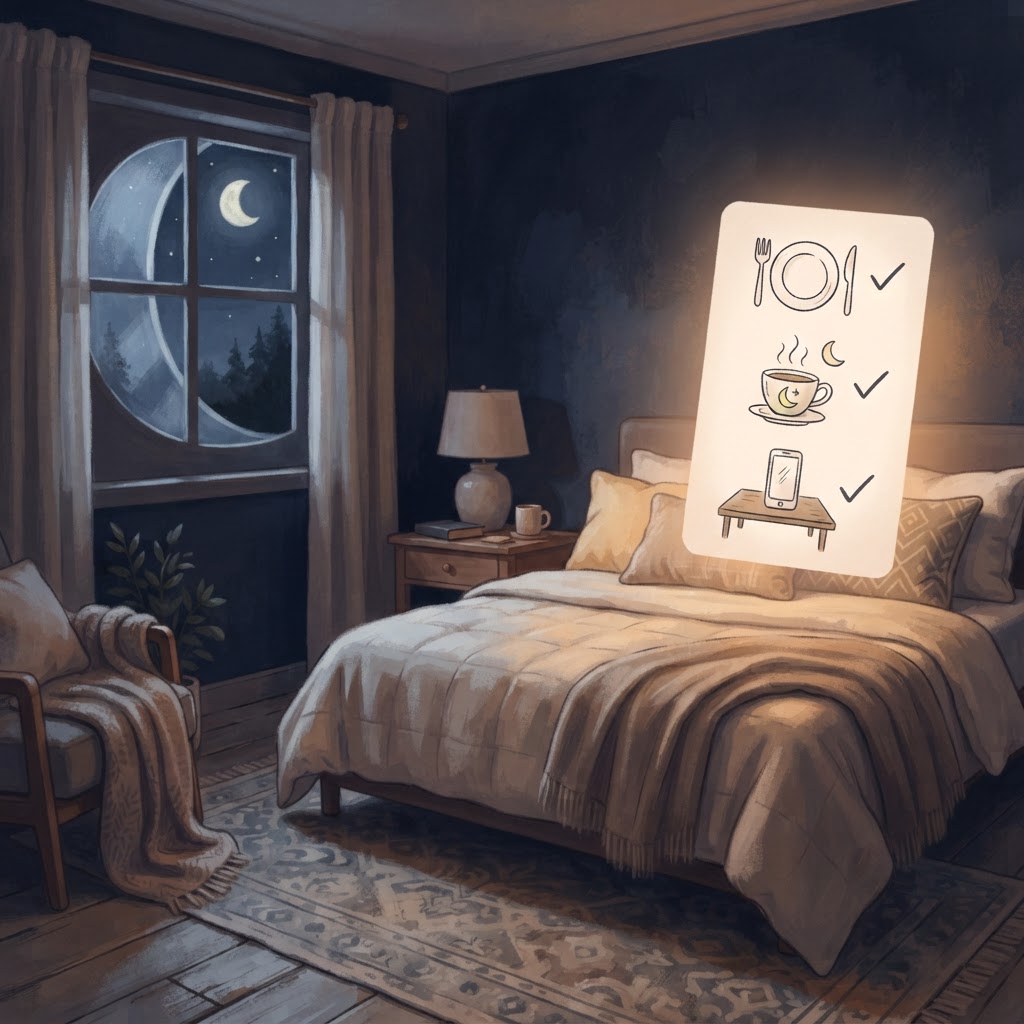
- Protect your body clock. Turn off screens an hour before bed and try to stop eating two to three hours before you sleep.
Final Word: Not a Cure, But a Key
Understanding your gut-brain axis gives you knowledge, not a prescription. Small, informed choices every day can help your gut and your mind work better together. The relationship between your brain and your belly is one of the most important in your body. It is worth listening to.
If stress, anxiety or sleep problems are affecting your daily life, speak to your GP first, as they can assess what is going on and discuss your options. If you would like to understand the digestive side of it, you can book a free chat with Power Gut.
This article is for educational purposes only and is not medical advice, diagnosis or treatment. Always speak to your GP or a qualified health professional before changing your diet, lifestyle or mental health treatment.
Want to explore this further?
A free 20-minute chat is available if you'd like to talk through how this relates to your own experience, no pressure, no obligation.
Get the free gut-brain health guide
5 things your doctor hasn't told you about your gut and your brain. Evidence-based, no fluff.
No spam. Unsubscribe anytime. Educational content only.
Related Articles

Have a question? We'd love to hear from you.
Send us a message — we respond within 1–2 working days.