Exploring the Gut-Brain Axis: Understanding Your Second Brain
Discover the powerful connection between your gut and brain, revealing how emotional states and digestion are intertwined. Learn why your digestive health is essential for mental well-being.
The Conversation You Never Knew You Were Having
Think back to the last time your stomach dropped. Perhaps it was before a job interview, during an argument, or the moment you received unexpected news.
That sudden churn, that hollow tightness, arrived before your conscious mind had fully processed what was happening. Your stomach seemed to know first.
For a long time, we were taught that the brain is the body's sole commander, issuing orders to silent, passive organs. Modern science has changed that picture. The gut is not a passive listener; it is an active conversationalist.
Welcome to the gut-brain axis: the two-way motorway connecting your brain to your digestive tract. Understanding it is a foundation for looking after both your mind and your body.
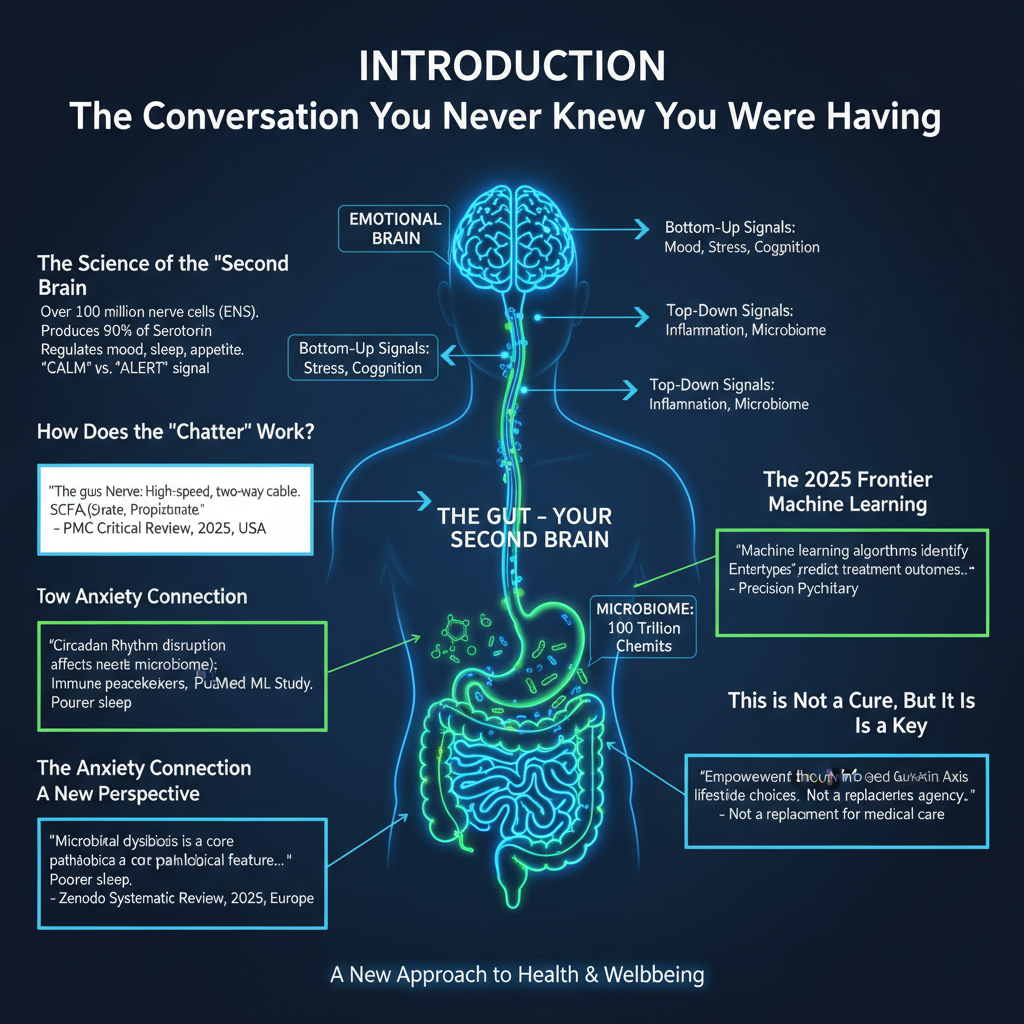
The Science of the "Second Brain"
Hidden in the walls of your digestive system is the enteric nervous system (ENS), a complex mesh of hundreds of millions of nerve cells. It is not a simple relay station. It is a sophisticated network that can run digestion largely on its own.
That is why scientists call it the "second brain". The gut also makes around 90% of the body's serotonin, a chemical messenger involved in mood, sleep and appetite. Gut serotonin stays mostly in the gut, but it shapes gut function and the signals the gut sends to the brain.
When your gut is inflamed or out of balance, those signals change. Research also shows the gut has its own daily rhythm, which links digestion to when you feel awake or sleepy and how strongly you react to stress.
How Does the "Chatter" Work?
Imagine the vagus nerve as a fibre-optic cable running from your brainstem to your gut. It carries signals very quickly, and in both directions.
Bottom-up: gut to brain
Most of the traffic on the vagus nerve travels upwards. When your gut is irritated or inflamed, signals and immune messengers can influence your brain, contributing to brain fog, tiredness and low mood.
Top-down: brain to gut
When your brain senses stress, it sends signals down that change how your gut moves, increase acid production and can affect the permeability of your gut lining.
The microbiome's role
Your gut is home to trillions of bacteria that act like miniature chemists. They ferment fibre and produce short-chain fatty acids (SCFAs) such as butyrate, acetate and propionate. These help maintain a healthy gut lining, calm inflammation and support communication with the brain.
This is one reason a plant-rich, high-fibre diet matters for mental wellbeing as well as digestion.
The Anxiety Connection
Anxiety used to be seen purely as a brain chemistry issue. Researchers now see a wider picture that includes the gut.
Studies have found that people with anxiety and depression often have different patterns of gut bacteria compared with people without these conditions. Disruptions to your daily rhythm, such as late-night eating, shift work or late-night screens, can also shift your microbiome.
The gut may not just respond to anxiety; it may contribute to it. This is why supporting the gut is a growing area of mental health research. It is not a replacement for therapy or medication, but it can be a helpful companion.
UK organisations such as the Mental Health Foundation recognise that diet and lifestyle are important parts of mental wellbeing.
The Frontier: Personalised Gut Health
One exciting development is the use of computer analysis, including machine learning, to study gut bacteria. Researchers are looking for patterns that might one day help predict which treatments or diets work best for each person.
This is still early research, but it points towards a future where care is more personalised, and where understanding your own gut becomes part of looking after your mental health.
Simple Ways to Support Your Gut-Brain Axis
- Eat a wide variety of plants: aim for 30 different plant foods a week.
- Include fermented foods: live yoghurt, kefir, sauerkraut or kimchi.
- Keep a regular rhythm: regular meals, regular sleep, and a gap between your last meal and bed.
- Calm your nervous system: slow breathing, walks and time outdoors.
- Get support: talking therapies and gut-directed hypnotherapy can help when stress and gut symptoms feed each other.
This Is Not a Cure, But It Is a Key
Understanding the gut-brain axis gives you agency, not a prescription. The food on your plate is not just fuel; it is information for your body and your microbiome. The connection between your brain and your belly is one of the most important relationships in your body. It is worth listening to.
If these symptoms are affecting your daily life, speak to your GP, who can assess what is going on and discuss your options. If you would like to understand the digestive side of it, you can book a free chat with Power Gut.
This article is for educational purposes only and is not medical advice, diagnosis or treatment. Always consult your GP or a qualified health professional about changes to your diet, lifestyle or mental health treatment.
Want to explore this further?
A free 20-minute chat is available if you'd like to talk through how this relates to your own experience, no pressure, no obligation.
Get the free gut-brain health guide
5 things your doctor hasn't told you about your gut and your brain. Evidence-based, no fluff.
No spam. Unsubscribe anytime. Educational content only.
Related Articles


Have a question? We'd love to hear from you.
Send us a message — we respond within 1–2 working days.