Autism and Gut Problems: Why They're So Common and What Helps
Constipation, sore tummies and tricky mealtimes are very common in autism. Why it happens, the signs pain can hide behind, and small changes that really help.
If you're autistic, or you care for someone who is, there's a good chance tummy trouble is part of everyday life. Constipation that never quite clears. Sore tummies. Meals that are a battle. A toilet routine that feels impossible.
It's not in your head, and it's not bad parenting. It's one of the most common, and most overlooked, parts of autism.
A large 2023 review pulled together questionnaire studies from around the world. It found that 55% of autistic children had at least one gut symptom, and they were more than three times as likely to have one as other children.
| Gut symptom | How common in autistic children | |---|---| | Constipation | 37% | | Bloated, swollen tummy | 23% | | Tummy pain | 21% | | Diarrhoea | 19% |
Adults are affected too. The good news is that a lot of this can be eased with small, practical changes.
Why does it happen?
There isn't one single cause. It's usually a mix of these:
A small "safe foods" list. Many autistic people stick to a few foods that feel predictable. Fresh food changes in taste and texture from one day to the next. A packet of crackers doesn't. That makes sense, but a narrow diet often means less fibre and less variety for the gut.
Missing the body's signals. Some autistic people find it harder to notice hunger, thirst or the need for the toilet. Scientists call this sense interoception. If thirst doesn't register, drinks get missed, and the gut slows down.
Toilets can be hard places. Echoing hand dryers, bright lights, strong smells, unfamiliar loos at school or work. It's very common to hold on rather than go, which can lead to constipation.
Anxiety and change. Your gut and brain are in constant conversation, and stress speeds up or slows down digestion. New routines, busy places and transitions can all show up in the tummy. We explain the link in Anxiety Stomach: Why Anxiety Hits Your Gut.
Some medicines. A few medicines can cause constipation as a side effect. Your GP or pharmacist can check.
Pain doesn't always look like pain
This is the part many families wish they'd known sooner.
Some autistic people find it hard to notice, describe or point to discomfort. So a sore, blocked tummy might show up as:
- meltdowns or more distress than usual
- poor sleep or waking in the night
- refusing food, or eating even fewer foods
- pressing the tummy against furniture, or unusual postures
- self-injury or more repetitive movements
- leaking soft poo, which can actually be a sign of a blockage further up (called overflow)
If behaviour changes suddenly, it's worth asking: could this be the gut?
So, does the gut cause autism?
You may have seen headlines about gut bacteria and autism. Here's where the science actually stands.
Autistic people often have a different mix of gut bacteria. But a large Australian study in 2021 found that this was mostly explained by diet. Autistic traits led to a less varied diet, and a less varied diet led to less varied gut bacteria. The researchers found very little direct link between autism itself and the microbiome, and warned against claims that gut bacteria drive autism.
So the gut doesn't cause autism, and changing it won't change who someone is. But looking after the gut can make a real difference to comfort, sleep and quality of life. That's a goal worth having.
A word on special diets: NICE advises against using exclusion diets, such as gluten-free or casein-free diets, to manage autism itself. If someone has a diagnosed condition like coeliac disease, that's different. Always talk to a GP or dietitian before cutting out food groups.
Small changes that help
You don't need to do all of these. Pick one or two that feel doable, and build from there.
At mealtimes
- Work with safe foods, not against them. If toast is a safe food, try wholemeal toast. If pasta is, try a mix of white and wholewheat. Small steps, same feel.
- Add fibre slowly, over a few weeks, so it doesn't cause wind or bloating. Our fibre guide has easy ideas.
- Let new foods be "just there". Looking, touching and smelling count as progress. Eating it can come later, or not at all.
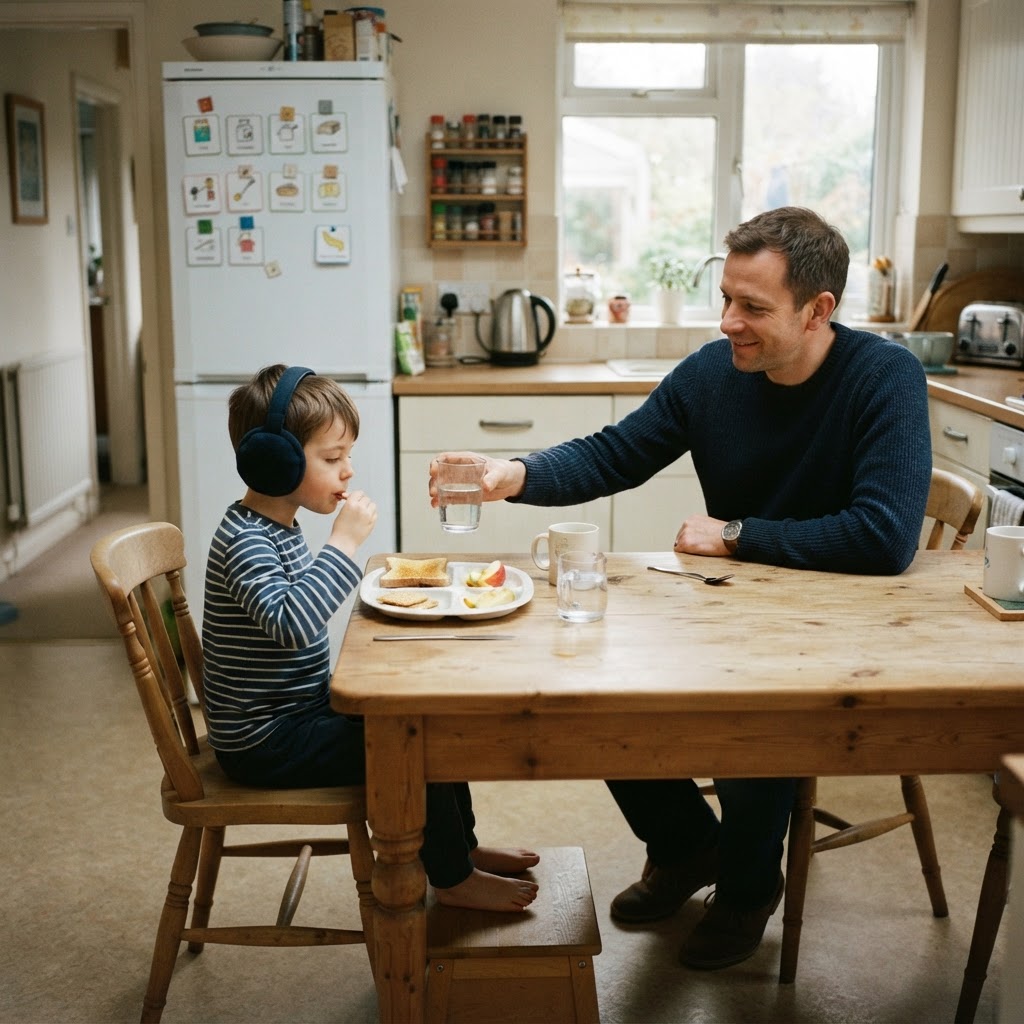
- Keep it calm. A quieter spot, the same plate, familiar music. Less pressure usually means more eating.
Drinks
- Use reminders, not thirst. A timer, a picture chart or a drink at set times of day.
- Any drink they like counts. Water is great, but diluted squash or milk is better than nothing.
Toilet time
- Make it a routine. Sitting on the toilet for a few minutes after breakfast or after dinner works with the body's natural rhythm.
- Feet up. A small footstool puts the body in a better position to poo.
- Make the space feel safe. Softer lighting, a favourite book, ear defenders for noisy hand dryers.
- Never use blame. Accidents and holding on aren't "naughty". They're usually a sign something is uncomfortable.
Body and calm
- Move every day. Walking, trampolining, swimming or a dance in the kitchen all help the gut keep moving.
- Gentle tummy massage in a clockwise circle can help some people, if touch feels OK.
- Plan for change. Visual timetables and warnings before transitions can ease anxiety, and the gut often follows.
Could there be nutrition gaps?
When someone eats a small range of foods, some nutrients can run low. NICE, which writes health guidance for the NHS, says restricted diets can lead to nutritional deficiencies, and that blood tests may sometimes be needed to check.
Two worth knowing about:
Vitamin D. Studies have found that autistic children often have lower vitamin D levels than other children. The NHS advises everyone to consider a daily 10 microgram supplement in autumn and winter, and children aged 1 to 4 should have one all year. Read our winter vitamin D guide.
Omega-3. Oily fish like salmon and sardines are the best source, and they're often not on a "safe foods" list. Omega-3 matters for general health. It isn't a treatment for autism, though, and the research on autism symptoms is mixed.
Guessing or knowing? Your GP is the first step, especially for children. If you're 16 or over and would like to check your own levels, a simple home finger-prick test for vitamin D or omega-3 can show where you stand. Power Gut helps you access a test from an established laboratory partner, and supports you with the results. Find out about testing
Please note: Power Gut tests are currently available for people aged 16 and over only. For children and younger teenagers, please speak to your GP, who can arrange any blood tests that are needed.
When to see your GP
Book an appointment if:
- constipation lasts more than a few days, or keeps coming back
- there's tummy pain, swelling or distress
- there's soiling or leaking poo
- someone eats fewer than 20 foods, or has cut out whole food groups
- there's weight loss, or a child isn't growing as expected
- behaviour, sleep or mood changes and you can't find a reason
Get urgent help if there's blood in poo, repeated vomiting, a very swollen and painful tummy, or someone seems very unwell.
Tip: tell the surgery about any needs in advance, such as a quieter waiting area, the first appointment of the day or extra time. These are called reasonable adjustments, and you're entitled to ask for them. Constipation often needs a proper treatment plan, so if one medicine is hard to take, go back and ask about other options.
You may also be referred to a dietitian, an occupational therapist (for sensory needs) or a paediatrician.
Quick answers
Why are autistic people more likely to have constipation? Usually a mix of a narrow diet, missing thirst or toilet signals, sensory issues with toilets, anxiety and sometimes medicines.
Can gut problems make autistic behaviour worse? Pain and discomfort can show up as distress, poor sleep or changes in behaviour, especially when someone finds it hard to describe how they feel. Treating the gut problem can help them feel more comfortable.
Do probiotics help autism? The research is still early and mixed. They aren't a treatment for autism. If you're thinking of trying them for gut symptoms, talk to your GP or a dietitian first.
Should I try a gluten-free diet? Not to treat autism. NICE advises against exclusion diets for managing autism itself. Speak to a professional before cutting out food groups.
Are ADHD and gut problems linked too? Yes, there's growing research on this. Read ADHD and Gut Health: Is There a Link?
Where Power Gut fits in
Living with gut problems, on top of everything else, can be exhausting, whether you're autistic yourself or supporting someone who is. If you'd like to talk it through and find the right kind of support, book a free 20-minute chat. There's no payment and no pressure.
More help: National Autistic Society: Eating · National Autistic Society: Toileting · ERIC: Constipation and autism · NHS: Constipation
This article is for education only and isn't medical advice. Please speak to your GP or a qualified health professional about your own or your child's health.
This article is for educational purposes only and does not constitute medical advice. Always consult your GP or a qualified healthcare professional for personal medical guidance.
Want to explore this further?
A free 20-minute chat is available if you'd like to talk through how this relates to your own experience, no pressure, no obligation.
Get the free gut-brain health guide
5 things your doctor hasn't told you about your gut and your brain. Evidence-based, no fluff.
No spam. Unsubscribe anytime. Educational content only.
Related Articles
ADHD and Gut Health: Is There a Link? What the Science Says
7 min read
Exam Stress and Stomach Aches: Why Your Gut Panics (and How to Calm It)
7 min read
Walking After Meals: The 10-Minute Habit for Bloating (Plus 5 Gentle Moves)
6 min readHave a question? We'd love to hear from you.
Send us a message — we respond within 1–2 working days.