How to Get More Fibre Into Your Diet – NHS Guide
Simple, practical tips from the NHS to help you reach your daily fibre goals.
How to Get More Fibre Into Your Diet
Simple, practical tips from the NHS to help you reach your daily fibre goals.
Quick Takeaways
- Adults should aim for 30g of fibre per day according to government guidelines
- Most adults in the UK currently eat only around 20g — that is 10g short every day
- Eating plenty of fibre is associated with a lower risk of heart disease, stroke, type 2 diabetes and bowel cancer
- Fibre also helps with digestion and prevents constipation
- Children need less fibre than adults, but many are still not getting enough
- Small, simple swaps can make a big difference
Why Do We Need Fibre in Our Diet?
Fibre is sometimes called "roughage." It is the part of plant foods that your body cannot fully digest. While it does not provide nutrients in the same way as vitamins or minerals, it plays a vital role in keeping you healthy.
According to the NHS, there is evidence that eating plenty of fibre is associated with a lower risk of:
- Heart disease
- Stroke
- Type 2 diabetes
- Bowel cancer
Choosing foods with fibre can also help with your digestion and prevent constipation.
How Much Fibre Do We Need?
Adults
Government guidelines say our dietary fibre intake should increase to 30g a day, as part of a healthy balanced diet. However, most adults in the UK are only eating about 20g on average.
That means we are falling short by about 10g every day.
Children
Children do not need as much fibre as adults, but they still need more than they are currently getting.
| Age Group | Recommended Daily Fibre | | --------- | ----------------------- | | 2 to 5 years old | About 15g | | 5 to 11 years old | About 20g | | 11 to 16 years old | About 25g |
On average, children aged 11 to 18 are getting only 16g a day — well below the recommendation.
Encouraging children to eat plenty of fruit, vegetables and starchy foods (choosing wholegrain versions and potatoes with the skins on where possible) can help ensure they get enough fibre.
Simple Tips to Increase Your Fibre Intake
The NHS advises that it is important to get fibre from a variety of sources. Eating too much of one type of food may not give you a healthy, balanced diet.
Here are some simple, practical tips from the NHS to help you increase your fibre intake:
1. Start with Breakfast
Choose a higher-fibre breakfast cereal such as:
- Plain wholewheat biscuits (like Weetabix)
- Plain shredded whole grain (like Shredded Wheat)
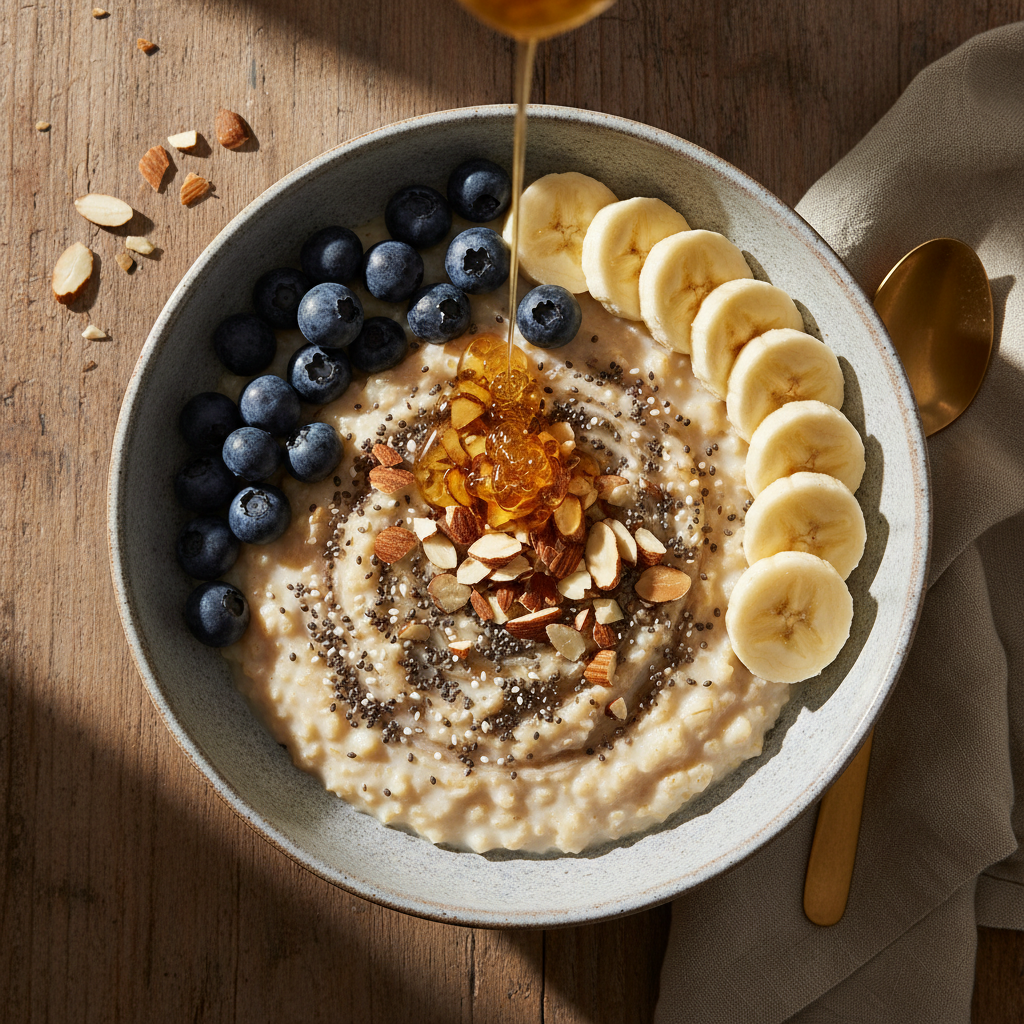
- Porridge — oats are also a good source of fibre
2. Choose Better Breads and Grains
Go for:
- Wholemeal or granary bread
- Higher-fibre white bread
- Wholegrains like wholewheat pasta, bulgur wheat or brown rice
3. Keep the Skins On
Choose potatoes with their skins on, such as:
- Baked potatoes
- Boiled new potatoes
4. Add Pulses to Your Meals
Add beans, lentils or chickpeas to:
- Stews
- Curries
- Salads
5. Fill Up on Vegetables
Include plenty of vegetables with meals, either as:
- A side dish
- Added to sauces, stews or curries
6. Choose Fruit for Dessert
Have fresh or dried fruit, or fruit canned in natural juice, for dessert.
Important note from the NHS: Because dried fruit is sticky, it can increase the risk of tooth decay. It is better to eat it as part of a meal rather than as a between-meal snack.
7. Snack Smarter
For snacks, try:
- Fresh fruit
- Vegetable sticks
- Rye crackers
- Oatcakes
- Unsalted nuts or seeds
What Does 30g of Fibre Look Like in a Day?
The NHS provides these examples to show how fibre can add up across a day.
Fibre at Breakfast
2 slices of wholemeal toast with peanut butter, followed by a medium-size orange: Around 8.3g of fibre
Fibre at Lunch
Wholemeal spaghetti with lentil and tomato sauce: Around 11g of fibre
Fibre at Dinner
Grilled chicken breast, skin-on baked potato, carrots and green beans: Around 11.2g of fibre
Fibre as a Snack
Eating a small handful of nuts (such as almonds), some fruit, or crackers and hummus can help increase your daily fibre intake. Make sure you choose unsalted nuts without added sugars.
Total from these examples: 8.3g + 11g + 11.2g = 30.5g of fibre
That is a full day's target reached with simple, everyday meals.
How to Read Food Labels for Fibre
Most pre-packaged foods have a nutrition label on the side or back of the packaging. This can include a guide to how much dietary fibre the food contains.
A useful rule of thumb from the NHS:
- High-fibre foods have 6g or more of fibre in every 100g
Quick Reference: Fibre Sources at a Glance
| Food Type | Examples | | --------- | -------- | | Breakfast cereals | Wholewheat biscuits, shredded whole grain, porridge | | Breads and grains | Wholemeal bread, granary bread, wholewheat pasta, brown rice | | Potatoes | Baked potatoes, new potatoes — with skins on | | Pulses | Beans, lentils, chickpeas | | Vegetables | All vegetables, especially with meals | | Fruit | Fresh fruit, dried fruit (with meals), fruit canned in natural juice | | Snacks | Fresh fruit, vegetable sticks, rye crackers, oatcakes, unsalted nuts and seeds |
The Bottom Line
Most of us in the UK are not eating enough fibre. Adults should aim for 30g per day, but most are only getting about 20g. Children are also falling short of their recommended intakes.
The good news is that small, simple swaps can make a big difference:
- Choose wholegrain versions of bread, pasta and rice
- Keep the skins on your potatoes
- Add beans, lentils or chickpeas to your meals
- Snack on fruit, vegetable sticks or unsalted nuts
- Start your day with a high-fibre breakfast
According to the NHS, eating plenty of fibre is associated with a lower risk of heart disease, stroke, type 2 diabetes and bowel cancer. It also helps with digestion and prevents constipation.
Remember: It is important to get fibre from a variety of sources. Increase your intake gradually and drink plenty of water to help the fibre move through your system.
Want to explore this further?
A free 20-minute chat is available if you'd like to talk through how this relates to your own experience, no pressure, no obligation.
Share this article
Have a question? We'd love to hear from you.
Send us a message — we respond within 1–2 working days.