The Sunlight You Carry Inside: Unlocking the Power of Vitamin D
Discover how vitamin D functions as a vital pro-hormone for immune health, calcium absorption, and overall wellbeing. Learn why tracking your levels is essential, especially during the UK's darker winter months.
There is a quiet conductor inside you, guiding calcium absorption, immune defences and even your daily mood. It does not demand attention. It simply gets on with its work, until the day it runs low.
That conductor is vitamin D. In the UK, where the sun is a fleeting friend for half the year, keeping this nutrient at a healthy level is one of the simplest and most overlooked acts of self-care.
This article explains what vitamin D is, how it works in your body, the quiet ways a shortfall can affect you, where to find it, and why knowing your own level can help. It draws on guidance from the Scientific Advisory Committee on Nutrition, NICE and the NHS, and on research from UK institutions including the University of Surrey and Queen Mary University of London.
More Than a Vitamin
Vitamin D is technically a pro-hormone. Your body converts it into a powerful chemical messenger that can influence the activity of hundreds of genes.
There are two main forms:
- Vitamin D2, which comes from fungi such as mushrooms.
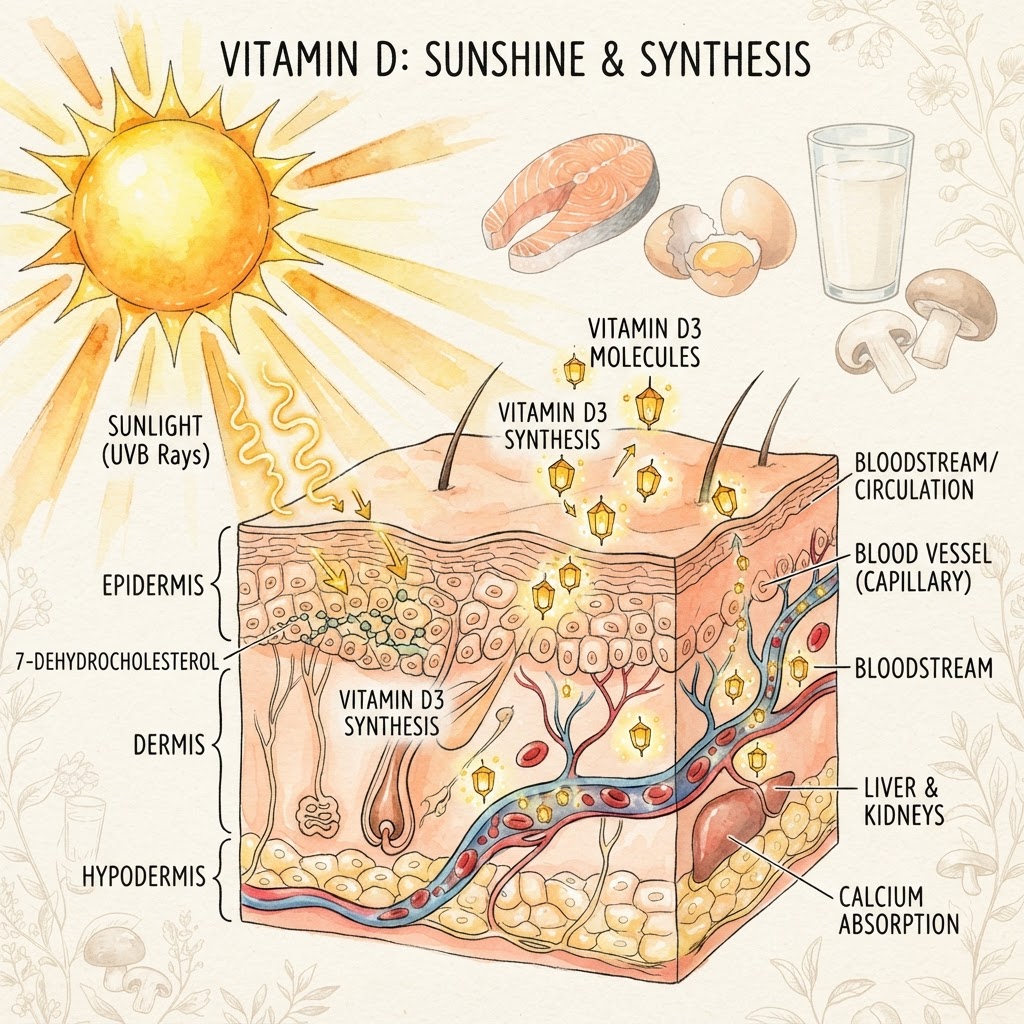
- Vitamin D3, the kind your skin makes when ultraviolet B (UVB) sunlight reaches it. It is also found in oily fish and eggs.
Both forms travel to the liver and then the kidneys to be activated into calcitriol, the form that does the heavy lifting.
Vitamin D's best-known job is helping your gut absorb calcium and phosphate, the minerals that keep bones and teeth strong. Without enough vitamin D, you could eat plenty of calcium and still not absorb it well.
Vitamin D receptors are also found in immune cells, muscles, the brain and the pancreas. This shows it plays a role in far more than bones, from fighting infections to supporting muscle function.
From Sunbeam to Cell Signal
- Skin: UVB rays turn a cholesterol-like compound in your skin into vitamin D3.
- Liver: it becomes 25-hydroxyvitamin D, the circulating form that blood tests measure.
- Kidneys: it is converted into active calcitriol.
Once inside a cell, calcitriol binds to the vitamin D receptor and switches genes on or off. In the gut, it boosts calcium absorption. In bone, it supports the constant renewal that keeps your skeleton strong. In immune cells, it helps keep your defences balanced.
Research led by Professor Adrian Martineau at Queen Mary University of London found that vitamin D supplements can help protect against acute respiratory infections, particularly in people whose levels are low to begin with.
The UK's Seasonal Challenge
The UK sits at a latitude where, from October to early March, sunlight does not contain enough UVB for your skin to make vitamin D. Even in summer, indoor living and sun protection limit how much you make.
The Scientific Advisory Committee on Nutrition defines deficiency as a blood level below 25 nmol/L. Many UK experts suggest 50 nmol/L or above as a better target for overall health. National survey data show that a significant number of adults and children in the UK fall below these levels, especially in winter and spring.
Some groups are at higher risk:
- People with darker skin
- People who cover their skin for cultural or religious reasons
- Older adults and people who are housebound
- People carrying excess weight
- Babies and young children
The Quiet Toll of Low Vitamin D
Mildly low vitamin D can be subtle. It might show up as tiredness, low mood, achy muscles, or catching every cold that goes around. Because these complaints are so common, they are easy to dismiss.
Over time, a deeper deficiency can affect bones:
- In children, it can cause rickets, a softening of the bones.
- In adults, it can cause osteomalacia (painful, weak bones) and contribute to osteoporosis, raising the risk of fractures.
Large studies have also linked low vitamin D with a range of other conditions, including depression and autoimmune conditions. These links do not always mean vitamin D is the cause, but the evidence is strong enough that the NHS recommends most people consider a daily supplement during autumn and winter.
Where to Find It
Sunlight
From late March to the end of September, most people can make enough vitamin D from short periods of sunlight on their skin, without burning. Always take care not to burn.
Food
- Oily fish: salmon, mackerel, sardines and herring
- Egg yolks, red meat and liver (liver is not suitable during pregnancy)
- Fortified foods: some breakfast cereals, fat spreads and plant milks
Even so, it is very difficult to get enough from food alone.
Supplements
The NHS advises that adults and children over 4 consider a daily supplement of 10 micrograms (400 IU) during autumn and winter. Some groups are advised to take one all year round. Research from the University of Surrey suggests D3 is more effective than D2 at raising blood levels. Do not take more than the recommended amount unless advised by a health professional.
Checking Your Level
Vitamin D status is very personal. It depends on your sun exposure, skin tone, diet, gut absorption, body weight and even your genes. Two people can follow the same advice and end up with very different levels.
If you are concerned, the natural first step is to speak with your GP. They can arrange a blood test if there is a clinical reason and give you personal medical advice.
Many people also use a home finger-prick test for a clear reading. It shows whether your level is deficient, insufficient or in a healthy range. With that knowledge, you can make informed choices with your GP or pharmacist, and a follow-up test a few months later shows whether your approach is working.
How Power Gut Can Support You
Power Gut can help you access a home vitamin D test, supplied and analysed by an established laboratory partner. You collect a small finger-prick sample at home and post it to the laboratory, and we support you to understand your report. We believe in gentle empowerment, not pressure.
If you are curious about your own levels, find out more at powergut.co.uk/gut-health-testing.
This article is for educational purposes only. Home testing provides wellness insights and does not diagnose medical conditions. Always consult your GP or a qualified healthcare professional before beginning new supplements.
Want to explore this further?
A free 20-minute chat is available if you'd like to talk through how this relates to your own experience, no pressure, no obligation.
Get the free gut-brain health guide
5 things your doctor hasn't told you about your gut and your brain. Evidence-based, no fluff.
No spam. Unsubscribe anytime. Educational content only.
Related Articles


Have a question? We'd love to hear from you.
Send us a message — we respond within 1–2 working days.