The Quiet Tug of War Inside Your Cells: Why Your Omega 3:6 Balance Matters
Discover how the delicate balance between omega 3 and 6 fatty acids impacts your body's inflammatory response. Learn how adjusting your intake can restore harmony and improve your overall gut and cellular health.
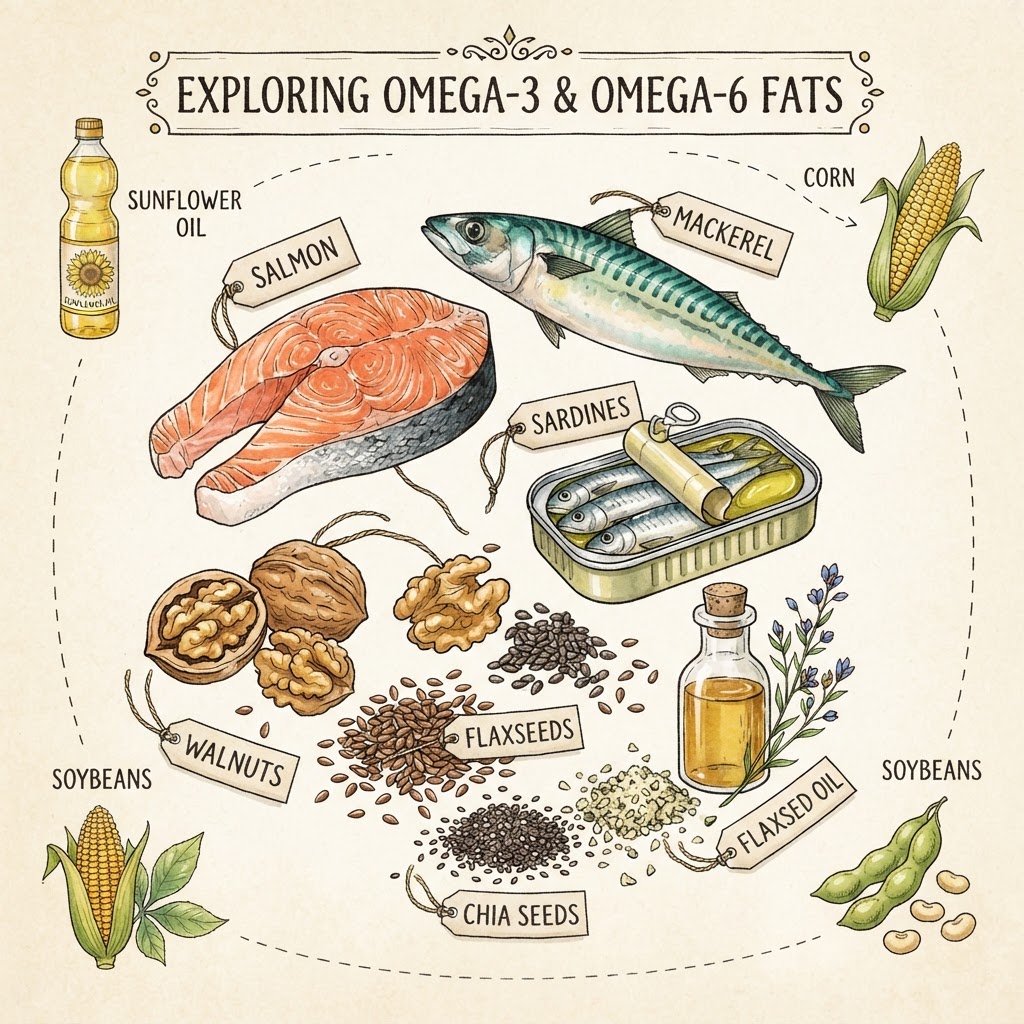
The article is ready to be published, just make sure the writting looks nice and easy to read, ensure to follow all the rules like the other articles like bibiography in the drop down many and crate a picture for the article with all variates of omega 3:6 from food so people can identify it easily, very illustrative.
The Quiet Tug of War Inside Your Cells: Why Your Omega 3:6 Balance Matters Imagine two teams working inside your body. One team triggers inflammation when you are injured or fighting an infection. The other team calms that inflammation down once the threat has passed. Both are essential. In a healthy body, they operate in a graceful, balanced rhythm. The problem comes when one team massively outnumbers the other, and the calm down signal never quite arrives. This is the reality for many people in the UK today, and it is driven by the fats we eat. This article unpacks the science of omega 3 and omega 6 fatty acids. You will learn what they are, how they shape your health from the inside out, what happens when the balance tips too far, where to find the right fats, and why measuring your own levels is a powerful step toward feeling better. The insights draw on work from the University of Southampton, the British Nutrition Foundation, and other leading research centres, mixed with key international findings. The Two Families of Essential Fat Omega 3 and omega 6 are polyunsaturated fats. Your body cannot make them, so they must come from food. The omega 6 family, led by linoleic acid, is abundant in modern diets. It is found in sunflower oil, corn oil, soybean oil, and the countless processed foods made with them. From linoleic acid, the body can make arachidonic acid, a longer fat that plays a key role in launching inflammation. The omega 3 family has three stars. Alpha linolenic acid, or ALA, comes from flaxseed, chia seeds, and walnuts. The body can convert a tiny fraction of ALA into the two truly powerful omega 3s: eicosapentaenoic acid (EPA) and docosahexaenoic acid (DHA). EPA and DHA are the fats that actively resolve inflammation, keep blood flowing smoothly, and build the structure of your brain and eyes. Because the conversion from ALA is so limited, getting EPA and DHA directly from marine sources or algae is vital. How They Work: The Cellular Thermostat Every cell in your body is wrapped in a membrane made of fats. The types of fat you eat end up in that membrane. When a cell is stressed or injured, it releases fatty acids that are transformed into local messengers called eicosanoids. Omega 6 derived eicosanoids tend to be proinflammatory. They help clot blood and summon immune cells. Omega 3 derived eicosanoids, especially those from EPA, are anti inflammatory. They help clear the inflammation away and restore peace. Professor Philip Calder at the University of Southampton has spent decades showing that the balance between these two families directly influences your body’s inflammatory tone. When omega 6 dominates, your system drifts into a state of chronic, low grade inflammation, the kind linked to heart disease, stiff joints, low mood, and slow recovery from illness. When omega 3 intake is robust, resolution pathways are well fueled, and the body returns more easily to a calm baseline. The Modern Imbalance For most of human history, our diet delivered omega 6 and omega 3 in a ratio close to two or three to one. Today, in the UK, that ratio is often fifteen or twenty to one. The reason is simple: cheap, refined vegetable oils have flooded our food supply, while oily fish consumption remains stubbornly low. The National Diet and Nutrition Survey shows that the average UK adult eats well under one portion of oily fish per week, far below the recommended one to two portions. The result is that cell membranes become loaded with omega 6 fats, and the body’s ability to resolve inflammation is compromised. This does not cause an immediate illness, but over years it can silently contribute to a wide range of common complaints, from skin that looks dull and dry to a mind that feels foggy and unfocused. Finding the Right Fats To rebalance, you need to increase EPA and DHA. The richest food sources are oily fish: salmon, mackerel, sardines, herring, and trout. For those who avoid fish, algae based supplements provide a direct, sustainable source of preformed omega 3s. Plant sources of ALA, like flaxseed and walnuts, are a wonderful addition to your diet, but they cannot replace EPA and DHA because the conversion rate is too low. At the same time, it helps to gently reduce the flood of omega 6. This does not mean eliminating it entirely; linoleic acid is essential in small amounts. It means being mindful of the oils you cook with. Swapping sunflower oil for olive oil and cutting back on ultra processed snacks can gradually shift your ratio back toward a healthier pattern. Why Testing Matters, and How You Can Check You cannot feel your omega 3:6 ratio. It gives no obvious symptoms until imbalance has been present for a long time. If you are curious about your own levels, you can certainly start by speaking with your GP. They can arrange a blood test if there is a clinical need, and they remain your best first port of call for any health concern. Many people also choose the convenience of a home finger prick test to get a clear picture at their own pace. This type of test measures the fats actually embedded in your red blood cell membranes, giving you a direct readout of your Omega 3 Index (the percentage of EPA and DHA), your omega 6 to omega 3 ratio, and other key markers. It reflects your intake over the past three to four months, not just what you ate yesterday. Knowing your numbers allows you to adjust your diet or supplement choice with precision, and then retest a few months later to see the improvement. At Power Gut, we understand how crucial it could be for certain people suffering from physical and mental challenges coming from the nutritional side. We help you to get checked, support you with your test results, and guide you with options that can be easier for people who have a busy life, where online support would be a great help. It is a simpler way to understand your body better. You can explore the testing options at https://powergut.co.uk/gut-health-testing. Disclaimer: This article is for educational purposes only. Home testing provides wellness insights and does not diagnose medical conditions. Always consult your GP or a qualified healthcare professional before making significant changes to your diet or taking new supplements.
Want to explore this further?
A free 20-minute chat is available if you'd like to talk through how this relates to your own experience, no pressure, no obligation.
Share this article
Have a question? We'd love to hear from you.
Send us a message — we respond within 1–2 working days.