Eating Omega-3 Rich Foods but Still Feeling Off? The Missing Piece of the Puzzle
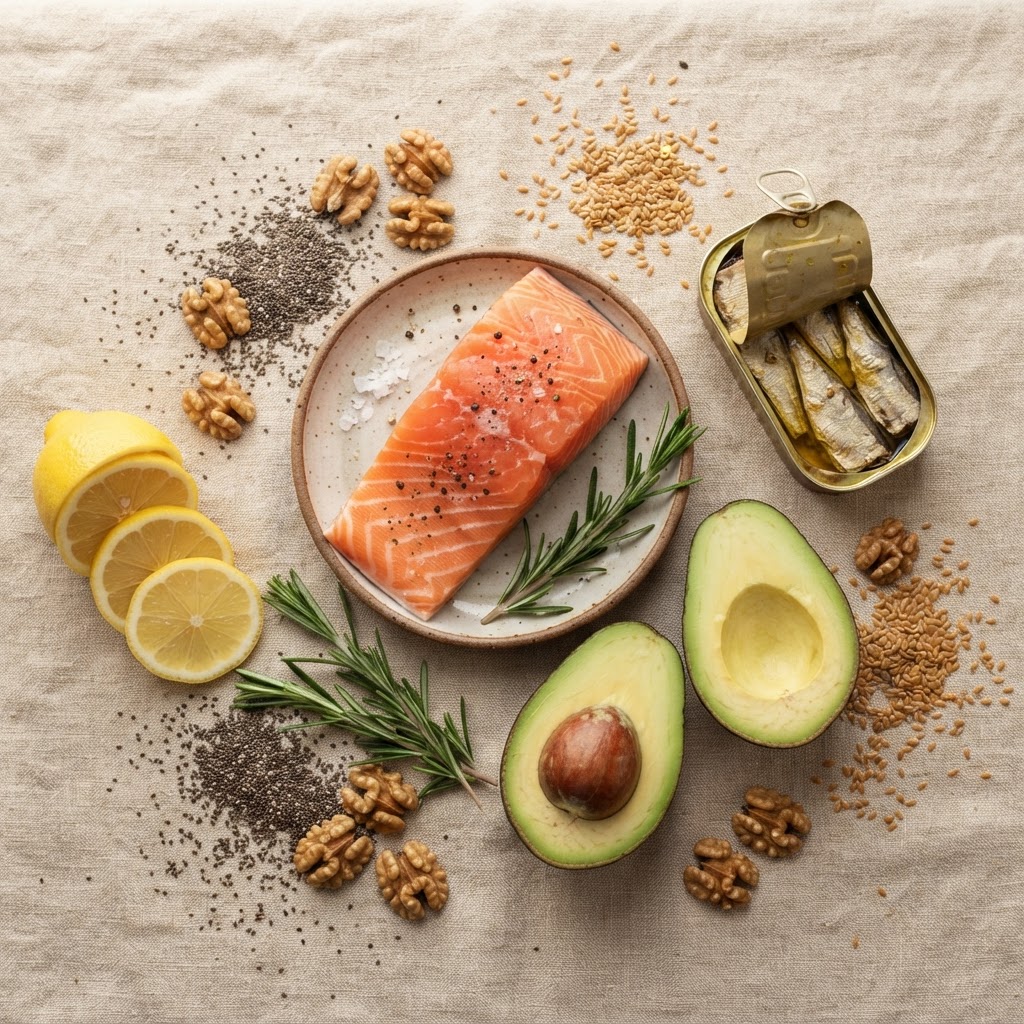
You're eating salmon, walnuts, and flaxseeds — so why do you still feel inflamed, tired, or mentally foggy? The answer lies not just in how much omega-3 you eat, but in the balance between omega-3 and omega-6 in your diet.
You're Doing Everything Right — So Why Does It Still Feel Wrong?
You've made the effort. Salmon twice a week. A handful of walnuts with your morning oats. Perhaps a flaxseed supplement on the side. You've read the articles, you've followed the advice — and yet something still feels off.
You might be experiencing persistent low-level inflammation. Brain fog that lifts and returns without warning. Fatigue that sleep doesn't quite fix. Joint stiffness. Skin that flares. Moods that dip unexpectedly.
Here's the truth most omega-3 articles miss: it's not just about how much omega-3 you eat. It's about the balance between omega-3 and omega-6 — and for most people in the UK, that balance is significantly out of kilter.
🧬 Understanding the Omega-3:6 Ratio
Omega-3 and omega-6 are both essential polyunsaturated fatty acids. Your body cannot make them — you must get them from food. But they don't just coexist peacefully. They compete for the same enzymes in your body, and their ratio determines whether your cells lean toward inflammation or resolution.
- Omega-6 fatty acids (found in vegetable oils, processed foods, grain-fed meat) generally promote inflammation — which is necessary in the short term for healing, but damaging when chronically elevated.
- Omega-3 fatty acids (found in oily fish, flaxseeds, walnuts, algae) resolve inflammation and support brain, heart, and gut function.
Historically, humans ate a ratio of roughly 1:1 to 4:1 omega-6 to omega-3. Today, the average Western diet sits at 15:1 to 25:1 — heavily weighted toward omega-6.
So even if you're eating omega-3-rich foods, if your omega-6 intake is high (which it likely is, given modern food systems), you may still be swimming upstream.
🔬 Why This Matters for Your Gut Health
Your gut lining is made up of cells that are highly sensitive to the inflammatory environment around them. Chronic omega-6 dominance can:
- Increase intestinal permeability ("leaky gut"), allowing undigested food particles and bacterial toxins to enter the bloodstream
- Disrupt the gut microbiome, favouring inflammatory bacterial strains over beneficial ones
- Impair the production of short-chain fatty acids, which are critical for nourishing your gut lining and regulating immune function
- Trigger systemic low-grade inflammation, which has been linked to IBS, IBD, depression, metabolic dysfunction, and autoimmune conditions
🧠 The Brain-Gut Connection
Omega-3 fatty acids — particularly EPA and DHA — are essential for brain structure and function. DHA makes up a significant portion of your brain's grey matter. EPA is a key modulator of neuroinflammation.
When your ratio is skewed toward omega-6:
- Serotonin and dopamine signalling can be impaired
- The vagus nerve (your gut-brain highway) becomes less efficient
- Mood disorders, anxiety, and cognitive fog become more likely
This is why many people report that correcting their omega ratio — not just adding omega-3, but reducing omega-6 — leads to noticeable improvements in mood, mental clarity, and emotional resilience.
⚠️ Signs Your Ratio May Be Off
Even with a healthy diet, you might notice:
| Category | Symptoms | |----------|----------| | Inflammatory | Persistent joint pain, skin flare-ups, frequent illness | | Digestive | Bloating, irregular bowel habits, food sensitivities | | Neurological | Brain fog, poor memory, low mood, anxiety | | Energy | Fatigue despite adequate sleep, afternoon energy crashes | | Metabolic | Difficulty maintaining a healthy weight, blood sugar fluctuations |
🍽️ The Hidden Sources of Omega-6 in Your Diet
Many people are surprised to learn where most of their omega-6 comes from. It's not always obvious:
- Vegetable and seed oils: sunflower, rapeseed, corn, soybean — used in almost all processed and restaurant foods
- Ultra-processed foods: crisps, biscuits, crackers, ready meals, takeaways
- Grain-fed meat and dairy: animals raised on grain have much higher omega-6 than grass-fed equivalents
- Certain nuts: while walnuts have omega-3, many nuts (cashews, peanuts, almonds) are high in omega-6
✅ How to Improve Your Omega Balance
1. Reduce omega-6 cooking oils
Switch to extra virgin olive oil, coconut oil, or grass-fed butter for everyday cooking. These have far lower omega-6 profiles.
2. Eat more oily fish — the right kinds
Prioritise sardines, mackerel, anchovies, herring, and wild salmon — these are among the richest dietary sources of EPA and DHA, and are more sustainable and affordable than many people realise.
3. Choose grass-fed and pasture-raised animal products
Grass-fed beef and lamb, pasture-raised eggs, and wild-caught fish all have significantly better omega ratios than their conventionally farmed counterparts.
4. Consider a high-quality omega-3 supplement
Not all supplements are equal. Look for:
- High EPA + DHA content (not just total omega-3)
- Triglyceride form (better absorbed than ethyl ester)
- Third-party tested for heavy metals and oxidation
- Sustainably sourced
5. Reduce ultra-processed food intake
Even one or two processed meals per day can dramatically shift your omega ratio. Batch cooking, whole food snacks, and reading ingredient labels can make a significant difference.
🧪 Know Your Numbers
Here's the powerful part: you can actually measure your omega balance. The Omega-3 Index is a validated blood test that measures the percentage of EPA and DHA in your red blood cell membranes. It's considered one of the most accurate ways to assess your cardiovascular and inflammatory risk.
An optimal Omega-3 Index is 8% or above. Most people in the UK sit between 4–5%, which puts them in the "at-risk" zone.
Knowing your number takes the guesswork out. Instead of wondering whether your current diet is working, you get a concrete biomarker that you can track and improve over time.
✨ A Final Thought
Eating omega-3 foods is a great start — but it's only half the picture. The other half is reducing what's working against them. When you understand the omega ratio and take targeted action, you're not just adding a supplement to an unchanged diet. You're changing the inflammatory landscape of your entire body — your gut, your brain, your mood, your energy.
That's a different kind of wellness. And it starts with knowing where you actually stand.
🔍 Want to Know Your Omega Balance?
At Power Gut, we offer an at-home Omega-3 Index test that gives you a precise reading of your EPA and DHA levels. No GP referral needed. And a personalised plan to help you get to optimal.
👉 Visit powergut.co.uk to learn more, or book a free consultation to discuss your results and next steps.
Want to explore this further?
A free 20-minute chat is available if you'd like to talk through how this relates to your own experience, no pressure, no obligation.
Share this article
Have a question? We'd love to hear from you.
Send us a message — we respond within 1–2 working days.