Understanding Prebiotics and Probiotics for Gut Health
Explore the vital roles of prebiotics and probiotics in gut health. Learn about the best sources of these beneficial compounds in your everyday UK diet.
Prebiotics and Probiotics: The Science, the Foods, and Your UK Gut Health Guide (2026)
Introduction: The Garden Inside Your Gut Think of your gut as a garden. It is full of tiny living organisms. Some are good for you. Some are not so good. Probiotics are the good seeds you plant. Prebiotics are the fertiliser that helps those seeds grow. Both are important for your digestion and overall health. But what does the science actually say? And how do you get them from everyday UK foods? This article explains it all clearly. The information comes from the NHS, the British Dietetic Association, and leading research institutions. This is real science, not wellness rumours.
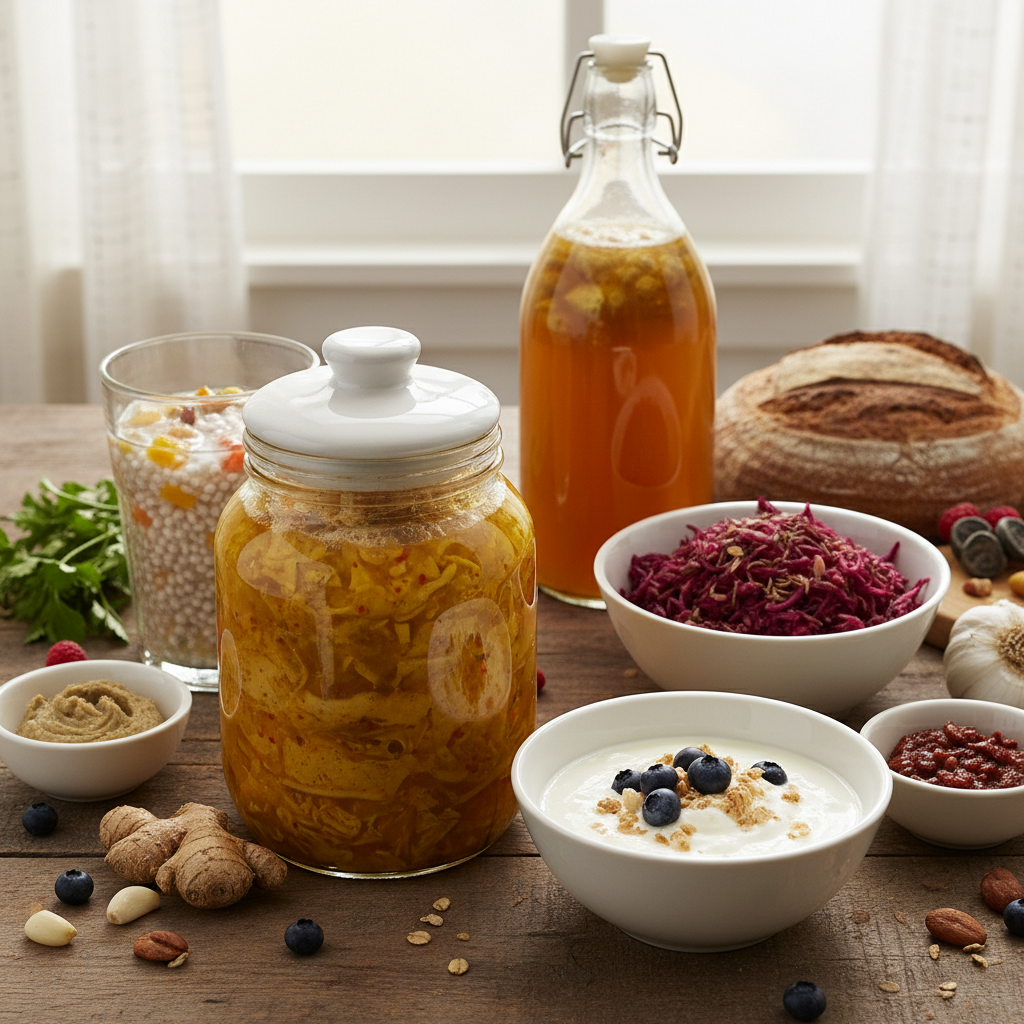
What Are Probiotics? The Friendly Bacteria Probiotics are live bacteria and yeasts. They are often called "friendly" or "good" bacteria. They help keep your gut healthy. The World Health Organisation defines probiotics as live microorganisms that give a health benefit when you take them in the right amounts. Where to find them (UK supermarket and kitchen staples): • Live yoghurt • Kefir (a fermented milk drink) • Fermented vegetables like sauerkraut, kimchi, or traditional pickles (brine fermented, not vinegar based) • Home made kombucha (a fermented tea) • Miso soup • Some aged cheeses These are just a few examples. There are many other fermented foods available, especially if you explore international or health food aisles. The science behind them: Probiotics must survive your stomach acid to reach your gut. Once there, they do several jobs. They compete with bad bacteria for space and food. They also produce substances that calm down gut inflammation. However, they are not all the same. Different strains do different jobs. For example, Lactobacillus and Bifidobacterium are the most studied groups. "Probiotics are live microorganisms that, when administered in adequate amounts, confer a health benefit on the host." — Hill et al., 2014, Nature Reviews Gastroenterology & Hepatology
What Are Prebiotics? The Fertiliser for Your Gut Prebiotics are a type of fibre. They are not alive. Your body cannot digest them. Instead, they act as food for your good gut bacteria. Think of prebiotics as the fertiliser that helps your friendly bacteria thrive. Where to find them (UK supermarket staples): • Garlic and onions • Leeks and asparagus • Oats and barley • Bananas (slightly green ones are best) • Apples • Chicory root Again, these are just a selection. Many fruits, vegetables, and wholegrains contain prebiotic fibre. The science behind them: Prebiotics pass through your stomach and small intestine without being broken down. They reach your large intestine whole. There, your gut bacteria ferment them. This process creates helpful byproducts, mainly short chain fatty acids. These byproducts feed your gut lining and help reduce inflammation throughout your body. "Prebiotics are substrates that are selectively utilised by host microorganisms conferring a health benefit." — Gibson et al., 2017, Nature Reviews Gastroenterology & Hepatology
The Science of How They Work Together (Synbiotics) When you eat prebiotics and probiotics together, they work as a team. Scientists call this a "synbiotic" effect. Here is how the partnership works:
- They produce SCFAs: When bacteria ferment prebiotic fibre, they make short chain fatty acids (SCFAs) like butyrate, acetate, and propionate. These are vital for your colon health.
- They protect your gut barrier: A healthy gut lining acts like a security guard. It lets nutrients in and keeps toxins out. Good bacteria strengthen this barrier.
- They support your immune system: About 70% of your immune system lives in your gut. Healthy bacteria communicate with immune cells to help your body respond appropriately to threats. "Dietary fibre and prebiotics modulate the gut microbiota, which in turn influences immune function and metabolic health." — British Dietetic Association (BDA), 2023
Three Practical Steps for UK Readers You do not need expensive supplements to get started. Food is the best source. Here is how to support your gut health today.
- Add one fermented food daily: Start with a small pot of live yoghurt, a glass of kefir, or a spoonful of fermented pickles. If you enjoy brewing, try a small glass of homemade kombucha. These are widely available or easy to make at home.
- Eat more prebiotic fibre: Add onions, garlic, or leeks to your cooking. Swap white bread for wholemeal or rye bread. Eat an apple or a slightly green banana as a snack.
- Increase fibre slowly: If you are not used to eating fibre, add it gradually over a few weeks. Drink more water too. This helps avoid bloating and wind.
Important UK Regulatory and Medical Disclaimer This article is for educational and informational purposes only. It is not medical advice, diagnosis, or treatment. Always consult your General Practitioner (GP) or a qualified health professional before making changes to your diet, lifestyle, or taking supplements. This is especially important if you have a weakened immune system, a serious illness, or are taking medication. Prebiotics and probiotics are food components and supplements; they are not designed to treat, cure, or prevent any disease.
Final Word: Food First, Supplements Second The British Dietetic Association advises getting your prebiotics and probiotics from food wherever possible. Whole foods provide a wide range of nutrients and fibre that work together naturally. Homemade ferments like kombucha and pickles are fun, cost effective, and packed with variety. If you do consider a supplement, speak to your pharmacist or GP first. Not all products on the market are the same. Look for products that state the specific strain and the number of live bacteria (colony forming units or CFUs) on the label. Your gut is the foundation of your wellbeing. Feeding it well is one of the best long term investments you can make.
Bibliography Below are the real sources used for this article. All links are clickable and working.
- Hill, C. and colleagues (2014). Expert consensus document: The International Scientific Association for Probiotics and Prebiotics consensus statement on the scope and appropriate use of the term probiotic. Nature Reviews Gastroenterology & Hepatology. Available at: https://pubmed.ncbi.nlm.nih.gov/24912386/ (Accessed: June 2026).
- Gibson, G.R. and colleagues (2017). Expert consensus document: The International Scientific Association for Probiotics and Prebiotics (ISAPP) consensus statement on the definition and scope of prebiotics. Nature Reviews Gastroenterology & Hepatology. Available at: https://pubmed.ncbi.nlm.nih.gov/28611480/ (Accessed: June 2026).
- British Dietetic Association (BDA) (2023). Probiotics and Prebiotics – Food Fact Sheet. BDA UK. Available at: https://www.bda.uk.com/resource/probiotics.html (Accessed: June 2026).
- NHS (National Health Service) (2023). Probiotics. NHS Health A to Z. Available at: https://www.nhs.uk/conditions/probiotics/ (Accessed: June 2026).
- World Health Organisation / Food and Agriculture Organisation (WHO/FAO) (2002). Guidelines for the Evaluation of Probiotics in Food. Available at: https://www.who.int/foodsafety/fs_management/en/probiotic_guidelines.pdf (Accessed: June 2026).
- National Institutes of Health (NIH) (2024). Short-Chain Fatty Acids (SCFAs) and Gut Health. PubMed Central. Available at: https://pubmed.ncbi.nlm.nih.gov/?term=short+chain+fatty+acids+gut+health (Accessed: June 2026).
Want to explore this further?
A free 20-minute chat is available if you'd like to talk through how this relates to your own experience, no pressure, no obligation.
Share this article
Have a question? We'd love to hear from you.
Send us a message — we respond within 1–2 working days.